

By Homeoremedyhub.com
1. Introduction
Separation Anxiety Disorder (SAD) is more than simple worry when a loved one leaves — it is a deep emotional distress that affects the mind, body, and sense of safety. While commonly seen in children, it also affects teenagers and adults, quietly shaping relationships, work life, and emotional well-being. With understanding, compassion, and gentle healing, separation anxiety can be managed and gradually eased.
2. Some Examples of Separation Anxiety Disorder
Separation Anxiety Disorder can appear differently at different stages of life. Below are expanded real-life examples showing how it may look emotionally, physically, and behaviourally.
2.1 Child Cries Before School
The child may start crying as soon as school is mentioned. They may cling to the parent’s clothes, beg not to be left, or create delays like refusing to get dressed, eat breakfast, or enter the school gate. The crying is often intense and long-lasting, not easily soothed by reassurance. The child may say things like, “What if something happens to you while I am at school?” or “I feel sick, I can’t go.” This is not simple misbehaviour — it is a genuine fear response.
2.2 Toddler Refuses To Sleep Alone
The toddler may only fall asleep if a parent is beside them and wakes up repeatedly during the night crying or searching for the caregiver. They may panic if they don’t see the parent immediately upon waking. Bedtime becomes stressful for the entire family, and the child may resist naps, demand constant holding, or show distress even when the parent briefly leaves the room.
2.3 Teenager Avoids Camps & Hostels
The teenager may decline school trips, camps, or college hostel life, even if they want to go. They may make excuses such as stomach pain, headaches, or sudden illness. Internally, they fear being away from home or family, even if they feel embarrassed to admit it. They may feel safe only when close to their attachment figures and anxious when imagining long separations.
2.4 Adult Experiences Panic When Partner Is Away
An adult with separation anxiety may feel restless, uneasy, or panicked when their partner travels, goes to work late, or doesn’t answer messages quickly. They may constantly check their phone, imagine worst-case scenarios, or feel unable to focus on work or daily tasks. They might avoid social events or trips that require being alone, and emotionally depend heavily on one person for a sense of safety.
2.5 Senior Distressed Without Caregiver
Older adults may become anxious when familiar caregivers change shifts or leave for the day. They may repeatedly ask when the caregiver will return, feel unsafe when alone, or worry excessively about health emergencies. This fear may be linked to vulnerability, declining health, or fear of being abandoned or helpless.
2.6 Additional Subtle Examples
- A child who refuses to attend birthday parties without parents.
- A person who avoids sleeping alone even in adulthood.
- Someone who feels intense anxiety when a loved one travels.
- A child who constantly checks if parents are still at home.
- A person who becomes physically ill (nausea, headache, stomach pain) before separation.
3. What is Separation Anxiety Disorder?
Separation Anxiety Disorder (SAD) is a mental and emotional health condition in which a person experiences intense, persistent, and overwhelming fear, distress, or anxiety when separated from someone to whom they are emotionally attached — such as a parent, spouse, caregiver, or loved one.
This fear is far stronger than normal or developmentally appropriate attachment, and it continues for an extended period of time, often interfering with daily life, education, work, relationships, and personal independence.
At its core, Separation Anxiety Disorder is not about weakness or dependency — it is about the brain’s misinterpretation of separation as danger.
Even when the person is logically aware that their loved one is safe, their emotional brain reacts as if a serious threat exists. This activates the body’s fear and stress system, releasing stress hormones such as cortisol and adrenaline, which leads to emotional panic and physical symptoms.
3.1 How it differs from normal separation anxiety
It is normal for:
- Infants and toddlers to cry when parents leave.
- Children to feel uneasy on the first days of school.
- Adults to miss loved ones when they travel.
However, Separation Anxiety Disorder is different because:
| Normal Reaction | Separation Anxiety Disorder |
| Mild, temporary discomfort | Intense, overwhelming distress |
| Improves with reassurance | Persists despite reassurance |
| Does not interfere with life | Interferes with school, work, sleep, or relationships |
| Age-appropriate | Continues beyond expected age |
3.2 Core characteristics of SAD
- The fear is excessive compared to the real situation.
- The fear is persistent, lasting weeks to months.
- The fear causes avoidance behaviors (not going to school, work, trips, etc.).
- The fear produces physical symptoms (nausea, headache, panic, chest tightness).
- The fear creates emotional dependency and loss of independence.
3.3 What happens in the brain?
In SAD:
- The emotional brain (amygdala) becomes overactive.
- The rational brain (prefrontal cortex) struggles to calm the fear.
- The nervous system remains in a constant “alert mode.”
As a result, separation is processed as a threat instead of a neutral or safe experience.
Who can develop SAD?
- Children, teenagers, adults, and even seniors can experience SAD.
- It may start in childhood and continue into adulthood.
- It can appear suddenly after trauma, illness, loss, or major life changes.
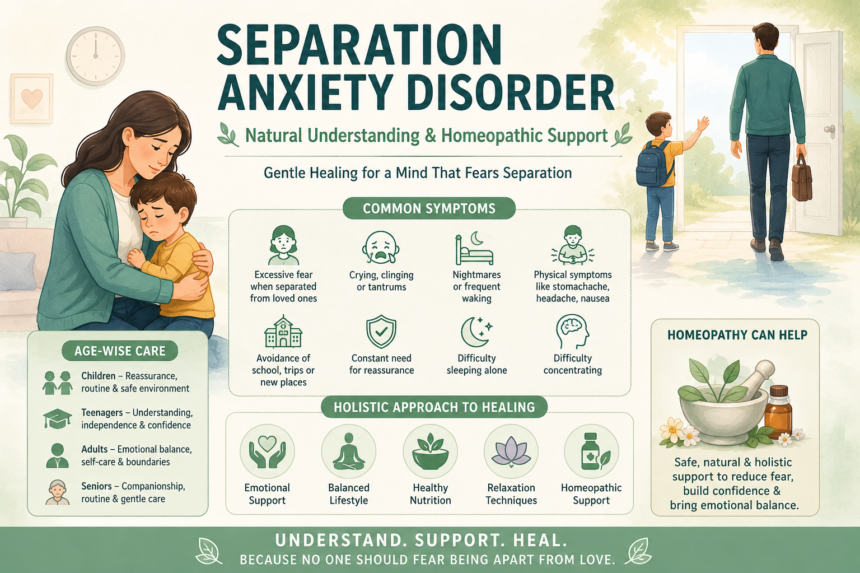
4. Common Symptoms
- Excessive crying or panic during separation
- Clinginess or refusal to be alone
- Fear of harm coming to loved ones
- Physical symptoms (stomach ache, headache, nausea)
- Nightmares about separation
- Difficulty sleeping alone
- School or work refusal
5. How Separation Anxiety Disorder Affects Daily Life
Separation Anxiety Disorder does not exist only inside the mind — it slowly influences almost every part of a person’s daily functioning. Because the fear of separation is constant and emotionally intense, the individual begins to shape their life around avoiding that fear. Over time, this can limit education, career growth, relationships, independence, and emotional development.
Below is a deeper look at how SAD affects different areas of life:
5.1 School and Education
Children with SAD may:
- Refuse to go to school or frequently ask to come home early.
- Cry, cling, or panic during drop-off.
- Experience poor concentration in class because their mind is focused on their parent’s safety.
- Develop learning gaps due to frequent absences.
This can affect academic confidence and social development, even though the child may be intelligent and capable.
5.2 Work and Professional Life
Adults with SAD may:
- Struggle to focus at work when separated from loved ones.
- Avoid jobs that require travel, long hours, or relocation.
- Decline promotions or opportunities that increase independence.
- Take frequent leave due to emotional distress or physical symptoms.
This limits career growth and can create frustration, guilt, or feelings of failure.
5.3 Social Relationships
SAD can reduce social engagement:
- The person may avoid parties, trips, sleepovers, or gatherings.
- They may rely emotionally on only one or two people.
- Friendships may fade because of constant cancellations or avoidance.
This can lead to loneliness, even though the person deeply desires connection.
5.4 Independence and Personal Growth
Independence is a natural part of emotional growth. SAD interferes with this by:
- Preventing the person from exploring new environments.
- Limiting confidence in handling life alone.
- Reinforcing the belief “I cannot cope without them.”
This creates emotional dependency rather than emotional resilience.
5.5 Emotional Well-Being
Living in constant fear of separation causes:
- Chronic stress and nervous exhaustion
- Irritability or emotional sensitivity
- Low self-confidence
- Feelings of shame, embarrassment, or guilt
Over time, this may contribute to depression or other anxiety disorders.
5.6 Physical Health
The nervous system remains in a stress state, leading to:
- Headaches
- Stomach aches
- Nausea or vomiting
- Sleep disturbances
- Fatigue and low immunity
The body starts expressing what the mind cannot resolve.
5.7 Family and Relationship Strain
Family members may:
- Feel helpless or guilty leaving the person.
- Become overprotective or exhausted emotionally.
- Experience conflict due to constant reassurance needs.
This can unintentionally reinforce the anxiety cycle.
5.8 Overall Impact
👉 Separation Anxiety Disorder slowly shrinks a person’s world.
Not because they lack ability — but because fear becomes the decision-maker.
5.9 Healing Perspective
When the fear response is calmed and emotional safety is restored, people naturally regain confidence, independence, and emotional freedom.
With understanding, emotional support, therapy, and gentle healing approaches like homeopathy, daily life can expand again — bringing balance, peace, and growth.
6. Why Does Separation Anxiety Disorder Occur?
Separation Anxiety Disorder does not have a single cause. It develops through a complex interaction between emotional makeup, early relationships, life experiences, and brain biology. When these factors combine in certain ways, the brain begins to associate emotional separation with danger — even when no real threat exists.
Below is a deeper explanation of the main contributing factors:
6.1 Emotional Sensitivity
Some people are naturally more emotionally sensitive. Their nervous system reacts more strongly to emotional changes, stress, or uncertainty.
These individuals:
- Feel emotions deeply
- Are more affected by conflict, loss, or change
- Have a stronger fear response when they feel unsafe
This emotional sensitivity makes them more vulnerable to anxiety disorders, including SAD.
6.2 Insecure Attachment Patterns
Attachment is the emotional bond formed in early childhood with caregivers.
If early relationships were:
- Inconsistent
- Overprotective
- Unpredictable
- Emotionally unavailable
the child may grow up feeling unsafe when alone, developing a belief such as:
👉 “I am only safe when someone is close to me.”
This belief becomes the emotional foundation for separation anxiety.
6.3 Stressful or Traumatic Life Events
SAD often begins after:
- Loss of a loved one
- Serious illness or hospitalization
- Parental divorce or conflict
- Accidents or natural disasters
- Sudden relocation or school change
These events teach the brain that separation is dangerous or painful, strengthening the fear response.
6.4 Overactive Fear Response in the Brain
In people with SAD:
- The amygdala (fear center) is overactive
- The nervous system remains in “alert mode”
- Stress hormones are released too easily
This makes the person feel unsafe even in normal situations like school, work, or sleep.
6.5 Learned Fear and Avoidance Cycle
When a person avoids separation:
- Anxiety decreases temporarily
- The brain learns that avoidance is “protective”
- Fear becomes stronger next time
This creates a self-reinforcing loop:
Fear → Avoidance → Temporary relief → Increased fear.
6.6 Family and Environmental Reinforcement
Well-meaning caregivers may unintentionally:
- Offer excessive reassurance
- Avoid leaving the person alone
- Adjust life around the anxiety
This can prevent the person from learning emotional independence.
7. Psychological Factors
- Insecure attachment patterns
- Low self-confidence
- High emotional sensitivity
- Trauma, loss, or abandonment experiences
- Overprotective parenting
8. Environmental Factors
- Parental divorce or illness
- Death of a loved one
- Change of school, home, or caregiver
- Hospitalization
- Natural disasters or major disruptions
9. The Combined Effect
When emotional vulnerability meets stressful life events, the brain’s fear system becomes overactive, leading to persistent anxiety around separation.
10. Natural & Holistic Approach to Healing
- Emotional reassurance
- Gradual exposure to independence
- Mindfulness and relaxation
- Supportive family environment
- Proper sleep, nutrition, and routine
- Homeopathy for emotional balance
11. Homeopathic Remedies for Separation Anxiety Disorder
Separation Anxiety Disorder is not just about feeling worried when apart from loved ones — it is an emotional and physiological reaction rooted in the nervous system. Homeopathy addresses this core emotional imbalance rather than just masking symptoms.
Homeopathic remedies work individually, based on the person’s emotional state, personality, and age. They help:
- Calm excessive fear and emotional overreaction
- Restore a sense of inner security and confidence
- Reduce physical symptoms of anxiety such as stomachache, headache, or restlessness
- Support gradual independence and emotional resilience
Unlike conventional medications that may suppress symptoms, homeopathy treats the whole person — mind, body, and emotional well-being. By gently retraining the nervous system and balancing emotions, it allows individuals to face separation with less fear, more calm, and greater emotional stability.
Homeopathy can be used safely for all age groups, from toddlers to seniors, making it a natural and holistic option for long-term improvement.
12. Age-Wise Medicine Chart
| Medicine | Infants & Toddlers (0–4 yrs) | Children (5–12 yrs) | Teenagers (13–18 yrs) | Adults (19–59 yrs) | Seniors (60+ yrs) | Key Indications |
| Pulsatilla | ✔ | ✔ | ✖ | ✖ | ✖ | Clingy, cries easily, seeks reassurance, fears being alone |
| Chamomilla | ✔ | ✔ | ✖ | ✖ | ✖ | Irritable, inconsolable children, restlessness, emotional oversensitivity |
| Calcarea carbonica | ✖ | ✔ | ✔ | ✖ | ✔ | Fear of separation, slow, needs security and routine |
| Silicea | ✖ | ✔ | ✔ | ✖ | ✔ | Shy, timid, low confidence, fear of new situations |
| Lycopodium | ✖ | ✖ | ✔ | ✔ | ✖ | Lack of self-confidence, anticipatory anxiety, performance fear |
| Gelsemium | ✖ | ✖ | ✔ | ✔ | ✖ | Trembling, weakness, anticipatory anxiety before events |
| Phosphorus | ✖ | ✖ | ✖ | ✔ | ✔ | Fear of being alone, seeks constant company, emotional dependency |
| Arsenicum album | ✖ | ✖ | ✖ | ✔ | ✔ | Restless anxiety, fear of danger, perfectionist, worry about loved ones |
| Kali phosphoricum | ✖ | ✖ | ✖ | ✖ | ✔ | Nervous exhaustion, emotional fatigue, mental strain |
| Natrum muriaticum | ✖ | ✖ | ✖ | ✔ | ✔ | Reserved grief, internalized sadness, fear of emotional loss |
12.1 How To Read The Chart
- ✔ = Recommended/commonly used for this age group
- ✖ = Not typically used for this age group
- Key Indications = Main emotional and behavioral signs for which the medicine is considered
13. Homeopathic Medicines for Separation Anxiety Disorder – In-Depth Guide
13.1 Pulsatilla
- Mental/Emotional: Clingy, affectionate, easily tearful, desires constant reassurance. Mood swings common; fears separation but responds to gentle comfort, like sympathy. Highly sensitive
- Physical Symptoms: Digestive complaints (loose stool, mild colic), congestion, teary eyes, occasional headaches.
- Situational Triggers: Separation from parent, change in routine, visiting unfamiliar places.
- Age: Infants, toddlers, young children.
- Therapeutic Use: Helps children adapt emotionally to brief separations and strengthens confidence in a gentle, caring way.
13.2 Chamomilla
- Mental/Emotional: Whining restlessness. Extremely irritable, impatient, inconsolable; anxiety often expressed as anger or tantrums. Overly sensitive to emotional and physical discomfort.
- Physical Symptoms: Teething pain, restlessness, digestive upset, sleeplessness.
- Situational Triggers: Parental absence, pain, and over-stimulation.
- Age: Infants, toddlers, young children.
- Therapeutic Use: Reduces irritability and emotional overreaction, calming nervous tension.
13.3 Calcarea carbonica
- Mental/Emotional: Fearful, cautious, shy; seeks security, routine, and reassurance. Anxiety increases with change or unpredictability.
- Physical Symptoms: Slow development, poor stamina, digestive issues, tendency to sweat, especially on head and scalp.
- Situational Triggers: School, sleepovers, new environments, separation from caregivers.
- Age: Children, teenagers, seniors.
- Therapeutic Use: Supports emotional stability, patience, and confidence in adapting to separation.
13.4 Silicea
- Mental/Emotional: Shy, timid, sensitive to criticism, internalizes fear, hesitant in new situations, emotionally dependent, Sensitive to all impressions.
- Physical Symptoms: Weak immunity, slow healing, brittle nails/hair, recurrent colds.
- Situational Triggers: Social events, school presentations, first-time experiences away from home.
- Age: Children, teenagers.
- Therapeutic Use: Encourages self-confidence, social courage, and emotional resilience.
13.5 Lycopodium
- Mental/Emotional: Lack of confidence, anticipatory anxiety, fear of failure, perfectionism, worry about performance or separation, Sadness in morning on awaking.
- Physical Symptoms: Digestive disturbances, bloating, fatigue, occasional headaches.
- Situational Triggers: Exams, public speaking, travel, school or work separation.
- Age: Teenagers, adults.
- Therapeutic Use: Strengthens inner confidence and reduces fear before anticipated separations.
13.6 Gelsemium
- Mental/Emotional: Timid, hesitant, anticipatory anxiety, mental heaviness, fear of upcoming separation or events. Bad effects from fright, fear, exciting news.
- Physical Symptoms: Trembling, weakness, dizziness, fatigue, heaviness in limbs, sleep disturbances.
- Situational Triggers: Exams, public events, hospital visits, travel.
- Age: Teenagers, adults.
- Therapeutic Use: Calms anticipatory nervous tension and reduces physical symptoms of anxiety.
13.7 Phosphorus
- Mental/Emotional: Fear of being alone, emotional dependence, sensitivity to others, easily influenced or worried about loved ones.
- Physical Symptoms: Fatigue, dizziness, digestive issues, fainting tendency, respiratory weakness.
- Situational Triggers: Separation from spouse, travel, hospitalization, solitude.
- Age: Adults, seniors.
- Therapeutic Use: Encourages emotional stability, reduces dependence, restores confidence in facing solitude.
13.8 Arsenicum album
- Mental/Emotional: Restless, perfectionist, obsessive worry about safety and security, anticipates danger.
- Physical Symptoms: Insomnia, digestive upset, fatigue, restlessness, chest tightness.
- Situational Triggers: Being alone, separation from loved ones, travel, uncertainty.
- Age: Adults, seniors.
- Therapeutic Use: Reduces fear-driven restlessness and anxiety, strengthens emotional resilience.
13.9 Kali phosphoricum
- Mental/Emotional: Nervous exhaustion, emotional weakness, stress-induced anxiety, irritability, mental fatigue and hallucinations of smell and sight.
- Physical Symptoms: Headaches, fatigue, muscle tension, poor concentration.
- Situational Triggers: Overwork, caregiving responsibilities, long-term emotional strain.
- Age: Seniors.
- Therapeutic Use: Recharges nervous system, reduces stress, and strengthens coping abilities.
13.10 Natrum muriaticum
- Mental/Emotional: Reserved grief, internalized sadness, fear of emotional loss, difficulty expressing emotions, longing for emotional security,depressed, particularly in chronic diseases
- Physical Symptoms: Mild insomnia, headaches, digestive complaints, fluid retention.
- Situational Triggers: Loss of loved ones, emotional conflict, living alone.
- Age: Adults, seniors.
- Therapeutic Use: Helps release suppressed grief, reduces emotional dependence, and restores inner security.
14. Age-Wise Safety Tips
- Infants: Never force separation abruptly
- Children: Gentle encouragement, emotional reassurance
- Teens: Build independence gradually
- Adults: Practice emotional self-regulation
- Seniors: Maintain consistent routines and caregivers
15. General Tips for All Ages
- Maintain predictable routines
- Encourage emotional expression
- Avoid sudden changes when possible
- Provide reassurance without overdependence
- Celebrate small independence steps
16. How Homeopathic Remedies Work for Separation Anxiety Disorder
Homeopathy approaches anxiety in a holistic and gentle way, addressing the emotional and psychological roots rather than just suppressing symptoms. Separation Anxiety Disorder arises from an overactive fear response in the nervous system, emotional dependence, and past experiences that have conditioned the brain to perceive separation as dangerous. Homeopathic remedies help by rebalancing the emotional system and calming the nervous system naturally.
16.1 Stimulating the Body’s Natural Emotional Regulation
- Homeopathic remedies act as triggers for the body’s self-healing mechanism.
- They gently remind the nervous system how to respond to fear and separation in a healthy, measured way.
- Over time, the brain learns to interpret separation as safe, reducing emotional overreaction.
16.2 Calming the Overactive Nervous System
- In Separation Anxiety Disorder, the nervous system is constantly “on alert.”
- Homeopathy helps reduce hyperarousal in the amygdala (the brain’s fear center), restoring calm.
16.3 Restoring Emotional Resilience
- Homeopathic treatment supports the emotional foundation of security.
- The remedies encourage confidence, independence, and coping skills, allowing the individual to face brief or long separations without distress.
- Emotional resilience improves gradually as the remedies reinforce self-soothing mechanisms.
16.4 Individualized Approach
- Each remedy is selected based on the person’s emotional state, personality, age, and symptoms.
- For example:
- A clingy toddler may benefit from Pulsatilla to gently calm attachment fears.
- A perfectionist adult may respond to Arsenicum album, reducing obsessive worry about loved ones.
- This personalized approach ensures the treatment is effective and safe.
16.5 Safe and Non-Suppressive
- Homeopathy works without sedating the patient or masking emotions.
- Instead of dulling feelings, it restores the body and mind’s natural balance, helping the person process fear safely.
- This makes it suitable for all ages, from infants to seniors.
16.6 Gradual and Long-Term Healing
- Healing with homeopathy is gradual, teaching the nervous system to respond appropriately to separation.
- Over weeks to months, emotional triggers that once caused panic or distress begin to lose intensity, allowing independence, confidence, and daily life functioning to improve.
- When combined with emotional support, routines, and gentle exposure, homeopathy can lead to lasting recovery.
17. Combination Approach for Best Results
Homeopathy works best when combined with:
- Counseling or therapy when needed
- Parental guidance and emotional support
- Mindfulness and relaxation practices
- Healthy lifestyle habits
18. Conclusion
Separation Anxiety Disorder is a deeply emotional condition that affects people of all ages. With compassion, understanding, and holistic support — especially through homeopathy — emotional security can be gently restored, helping individuals rediscover confidence, independence, and inner peace.