
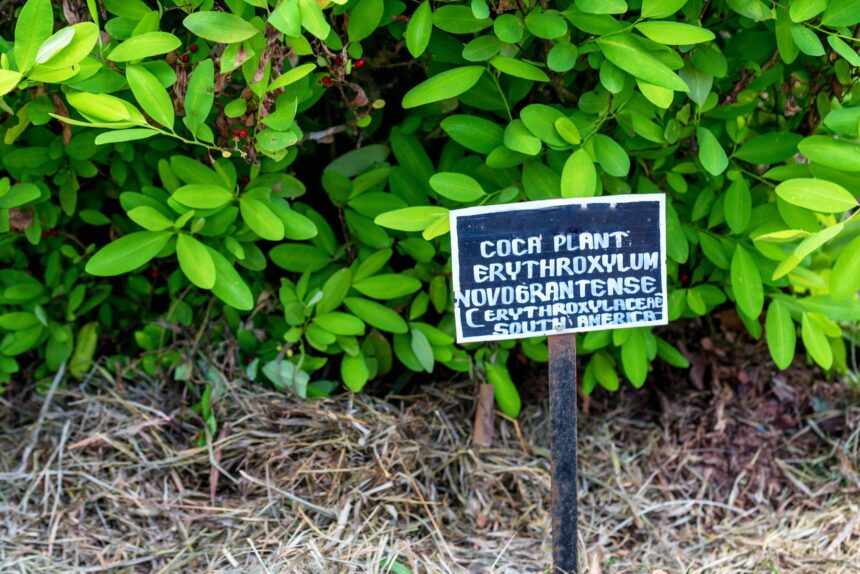
1) Plant Origin (Source & Identity)
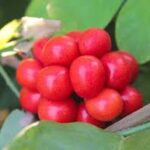
- Botanical name: Erythroxylum coca
- Family: Erythroxylaceae
- Common names: Coca, Coca leaf
- Natural habitat: Andes mountains of South America (Peru, Bolivia, Colombia)
- Part used: Fresh leaves
2) Extraction & Homeopathic Preparation
Fresh coca leaves are harvested and macerated in alcohol to produce the mother tincture (Q). This tincture is then potentized through serial dilution and succussion, following official homeopathic pharmacopeia standards.
Safety note:
While coca leaves contain cocaine alkaloids in their raw state, homeopathic preparations are highly diluted, non-addictive, and safe when produced by licensed pharmacies.
3) Core Sphere of Action
Coca primarily acts on:
- Nervous system
- Circulatory system
- Respiratory function
- Vital stamina
Central Theme:
Loss of physical endurance with breathlessness and circulatory weakness.
4) Characteristic Symptoms & Keynotes
- Breathlessness on minimal exertion
- Weak pulse and palpitations
- Physical exhaustion with mental alertness
- Inability to sustain physical effort
- Symptoms resembling mountain sickness
- Tendency to collapse after exertion
- Improvement with rest
Keynote:
Physical exhaustion with preserved mental clarity.
5) Key Repertory Rubrics
- Respiration: difficult, on exertion
- Weakness: physical, on exertion
- Heart: palpitations, on exertion
- Circulation: weakness
- Generalities: loss of endurance
6) Comparative Remedies (Differentials)
| Feature | Coca | China Off. | Gelsemium |
|---|---|---|---|
| Weakness | Physical | From fluid loss | Nervous |
| Breathlessness | Marked | Mild | Moderate |
| Mental clarity | Preserved | Dull | Dull |
| Collapse | From exertion | From depletion | From fear |
7) Therapeutic Uses in Homeopathy
Common (Subacute Conditions):
- Breathlessness on exertion
- Physical fatigue
- Circulatory weakness
Chronic Conditions:
- Chronic physical exhaustion
- Weak heart action
- Reduced stamina
- Post-illness fatigue
Severe Conditions (Adjunctive Only):
- Altitude sickness
- Tendency to collapse
Requires medical supervision.
8) Constitutional Portrait (Who Benefits Most)
Coca is best suited for individuals who:
- Are physically exhausted but remain mentally alert
- Experience breathlessness with minor exertion
- Have reduced stamina
- Show signs of circulatory weakness
Often indicated in elderly patients or those recovering from chronic illnesses.
9) Potency & Practical Usage
| Potency | Pack Size | Clinical Role |
|---|---|---|
| 6C | 100 ml | Physical exhaustion, breathlessness |
Dosage Guidance:
- Prescribed in short courses
- Avoid excessive repetition
- Discontinue once stamina improves
10) Effects in Children & Seniors
Children:
- Rarely indicated
- Occasionally useful for exertional fatigue
Seniors:
- Breathlessness
- Weak circulation
- Reduced physical endurance
Medical monitoring is recommended.
11) Clinical Insights
Coca is a valuable remedy for pure physical exhaustion when mental alertness remains. Unlike China Officinalis, where weakness follows fluid loss, Coca suits those whose exhaustion results from circulatory and respiratory inefficiency. Breathlessness on slight exertion is a key indication.
Coca is particularly effective for altitude sickness, where oxygen deficiency leads to collapse-like symptoms. Improvement under Coca is seen in easier breathing, steadier pulse, and gradual restoration of physical endurance. Its gentle action on circulation makes it especially suitable for elderly patients when used with care.
12) Sample Repertorization Chart
| Rubric | Coca | China Off. | Gelsemium |
|---|---|---|---|
| Breathlessness – exertion | 3 | 1 | 2 |
| Physical exhaustion | 3 | 3 | 2 |
| Mental clarity | 3 | 1 | 1 |
| Weak circulation | 3 | 2 | 2 |
| Collapse tendency | 2 | 2 | 1 |
Conclusion
Coca holds a unique position in homeopathy for conditions involving loss of physical endurance without mental impairment. Its primary strength lies in restoring circulatory and respiratory efficiency, making it especially useful for patients experiencing breathlessness and collapse after exertion.
When prescribed in low potency with careful monitoring, Coca can improve stamina, stabilize circulation, and enhance overall physical resilience. Because such cases often involve underlying cardiac or respiratory compromise, integration with conventional medical care is essential. Used judiciously, Coca remains a valuable supportive remedy for rebuilding strength and functional capacity.
Coca also highlights the homeopathic understanding that vitality is closely linked to efficient oxygenation and circulatory balance. In individuals who experience disproportionate fatigue from minimal exertion, especially at high altitudes or during travel, this remedy supports gradual adaptation and improved tolerance to physical strain. Rather than acting as a stimulant, Coca works by enhancing the body’s functional response to reduced oxygen supply. With proper case evaluation and regular follow-up, it can form part of a comprehensive strategy aimed at strengthening endurance while ensuring safety through appropriate medical supervision.