

1. Introduction: What Is Anxiety?
Types of Anxiety are medically recognized conditions in which the brain’s fear and stress response becomes overactive, leading to emotional and physical symptoms.
Anxiety is a normal, protective response of the human brain. It works like an internal alarm system, alerting us to potential dangers and helping us stay safe. In healthy situations, this alarm turns on only when there is a genuine threat.
In anxiety disorders, however, this system becomes overactive. The brain sends danger signals even when there is no real threat, leading to ongoing fear, tension, and physical discomfort.
In simple terms:
Anxiety happens when the brain’s alarm system is triggered too often or too intensely, even in safe situations.
2. What Happens Inside the Body During Anxiety?
Anxiety affects both the brain and the body.
Key components involved:
- Amygdala: The brain’s fear center
- Stress hormones: Adrenaline and cortisol
When anxiety occurs:
- The amygdala is overstimulated
- The brain sends false alarms
- Stress hormones are released unnecessarily
- The body enters a “fight or flight” state- even without a real threat
Common physical symptoms:
- Rapid heartbeat
- Fast or shallow breathing
- Sweating
- Shaking or trembling
- Chest tightness
- Stomach discomfort
- Restlessness or inner fear
These are real physical responses, not just “in your head.”
3. Medical Definition of Anxiety
Clinically, anxiety is a condition where the brain repeatedly triggers fear and stress responses in the absence of true danger, resulting in emotional distress and physical symptoms.
4. Why Does Anxiety Develop?
Anxiety may arise from one or a combination of these factors:
- Ongoing stress
- Traumatic experiences
- Chronic worry or emotional strain
- Chemical imbalances in the brain
- Genetic predisposition (family history)
- Poor sleep over time
- Excessive caffeine or stimulant use
- Certain medical conditions
Typically, anxiety results from a mix of biological and environmental influences.
5. Is Anxiety a Disease?
Yes. When anxiety is intense, frequent, or disrupts daily life, it is classified as an anxiety disorder.
Important points:
- Anxiety is not a sign of weakness
- Anxiety is not insanity
- Anxiety is not imagined
It is a legitimate medical and psychological condition involving brain–body dysregulation.
6. Normal Anxiety vs. Anxiety Disorder
Normal AnxietyAnxiety DisorderOnly in real dangerEven when safeTemporaryPersistentBody relaxes after threatBody stays tenseMind calms downMind remains worried/fearful
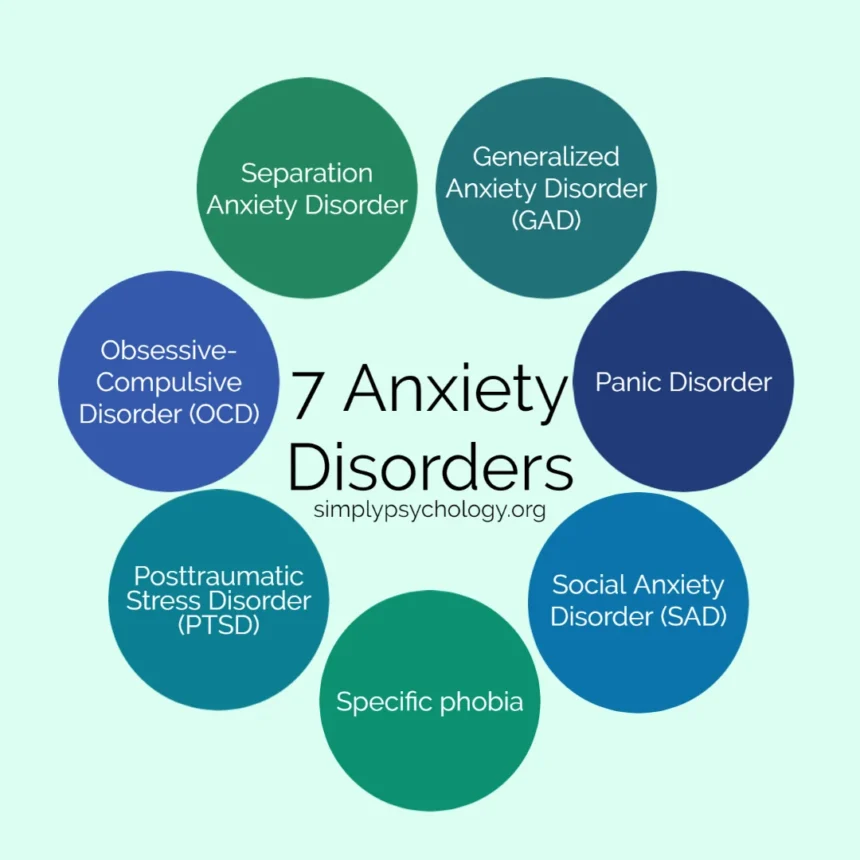
7. Medically Recognized Types of Anxiety Disorders
- Generalized Anxiety Disorder (GAD): Ongoing, excessive worry about various life issues (health, finances, family, future) lasting for months.
- Panic Disorder: Sudden panic attacks with intense fear, heart palpitations, breathlessness, dizziness, and fear of losing control.
- Social Anxiety Disorder: Intense fear of social situations, driven by concerns about embarrassment or judgment.
- Specific Phobias: Strong, irrational fear of particular objects or situations (heights, animals, injections, flying, etc.).
- Agoraphobia: Fear of places where escape may feel difficult, such as crowded areas, public transport, or open spaces.
- Separation Anxiety Disorder: Excessive fear about being separated from loved ones; common in children, but can affect adults.
- Health Anxiety (Illness Anxiety Disorder): Persistent worry about having a serious illness despite normal medical tests.
- Post-Traumatic Stress Disorder (PTSD): Follows traumatic events (accidents, abuse, disasters) with symptoms like flashbacks, nightmares, and avoidance.
- Obsessive-Compulsive Disorder (OCD): Involves intrusive thoughts (obsessions) and repetitive behaviors (compulsions) to relieve anxiety.
8. Consolidated Overview of Anxiety Types
| Disorder | Core Fear |
|---|---|
| GAD | Multiple life concerns |
| Panic Disorder | Sudden fear attacks |
| Social Anxiety | Social judgment |
| Phobias | Specific object or situation |
| Agoraphobia | Public or crowded places |
| Separation Anxiety | Loss of attachment |
| Health Anxiety | Serious illness |
| PTSD | Past trauma |
| OCD | Thoughts and rituals |
9. Clinical Summary
Anxiety is a brain-based medical condition characterized by heightened threat perception and stress responses. It can affect anyone and appears in several clinically recognized forms. Early understanding, proper medical assessment, and effective management are key for recovery and well-being.
Timely intervention significantly reduces long-term complications and improves quality of life.