
1. Plant Origin & Identity
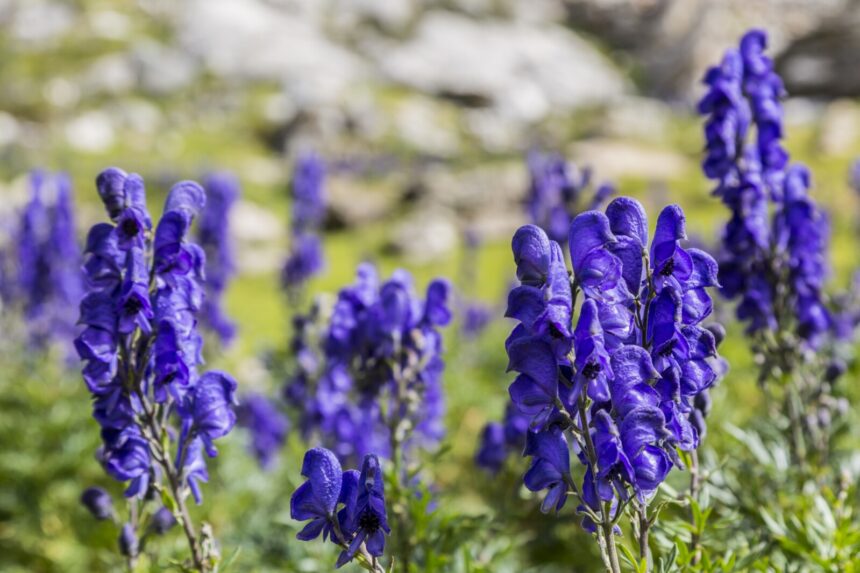
- Botanical Name: Aconitum napellus
- Family: Ranunculaceae
- Common Names: Monkshood, Wolfsbane, Aconite
- Natural Habitat: Cool, mountainous regions of Europe and Asia
- Part Used: Fresh, whole flowering plant
Materia Medica Significance:
Aconite Napellus is renowned as the classic remedy for conditions that begin suddenly and violently, often accompanied by intense fear, anxiety, and pronounced restlessness.
2. Extraction & Homeopathic Preparation
- Mother Tincture (Q): Made by macerating the fresh flowering plant in alcohol, followed by filtration.
- Potentization: The tincture is diluted and succussed serially to produce various homeopathic potencies.
Safety Note:
The crude plant is highly toxic. Only use homeopathic potencies prepared by professional pharmacies.
3. Core Remedy Picture (Keynotes)
- Essence:
- Sudden onset of illness
- Intense fear and panic
- Marked mental and physical restlessness
- Acute inflammatory states
- Mental- Emotional:
- Fear of death; predicts time of death
- Panic attacks after fright or shock
- Inability to keep still
- Physical:
- Sudden high fever
- Dry heat and thirst
- Palpitations, breathlessness
- Acute inflammation without pus
4. Therapeutic Uses in Homeopathy
A. Acute Ailments:
- Sudden fever after exposure to cold, dry wind
- Acute sore throat with dryness and burning
- Sudden colds with anxiety and restlessness
- Panic attacks following shock or fright
- Acute, sudden neuralgic pains
B. Chronic Ailments:
- Rarely used as a chronic remedy; primarily for acute flare-ups or initial stages in chronic illnesses
C. Severe/Emergency States:
- Early stages of pneumonia or meningitis
- Sudden, intense cardiac anxiety with fear
- Acute, shock-like inflammatory reactions
5. Constitutional Profile
- Best Suited For:
- Robust, strong individuals prone to sudden illness
- Highly sensitive, reactive nervous systems
- Symptoms triggered by fright, shock, or cold exposure
- Effect on Patient:
- Nervous system becomes explosively reactive, resulting in panic, intense restlessness, and rapid inflammatory responses.
6. Potency & Practical Use
| Potency | Pack Size | Practical Clinical Use |
|---|---|---|
| 30C | 100 ml | Most common potency for acute Aconite states with fear and restlessness |
| 200C | 100 ml | Very intense panic, severe acute inflammatory conditions |
- Repetition: Use at frequent intervals in acute cases; stop dosing immediately upon improvement. Avoid further doses once symptoms subside.
7. Effects in Children & Seniors
- Children:
- Sudden fever with anxiety/restlessness
- Night terrors after fright
- Acute respiratory distress (requires medical attention)
- Seniors:
- Sudden cardiac anxiety
- Acute inflammatory episodes
- Always exclude serious medical causes
8. Documented Clinical Use & References
Classical authorities (Hahnemann, Kent, Clarke, Boericke) highlight Aconite Napellus for:
- Fear of death
- Sudden fever and inflammation
- Acute anxiety states
It is widely used in homeopathic emergencies alongside conventional medicine.
9. Key Repertory Rubrics (Practical)
- Mind:
- Fear of death
- Sudden anxiety
- Intense restlessness
- Generalities:
- Sudden onset
- Worse from cold, dry wind
- Worse at night, before midnight
- Fever:
- Sudden onset
- Dry, burning heat
- Respiration/Circulation:
- Sudden dyspnea
- Palpitations with anxiety
10. Sample Repertorization Chart (Teaching Example)
| Rubric | Aconite Nap | Belladonna | Arsenicum | Gelsemium |
|---|---|---|---|---|
| Sudden onset | 3 | 3 | 1 | 1 |
| Fear of death | 3 | 1 | 2 | 1 |
| Restlessness | 3 | 1 | 3 | 0 |
| Fever – dry heat | 3 | 3 | 1 | 1 |
| Cold wind aggravation | 3 | 1 | 1 | 0 |
Clinical Interpretation & Prescribing Strategy:
Aconite Nap should be viewed as an emergency-stage remedy whose effectiveness depends heavily on timing and case perception. It is most valuable when the disease process is functional rather than structural, and when symptoms arise with sudden violence following an identifiable exciting cause such as fright, shock, emotional trauma, or exposure to cold dry wind. The clinician should note that fear, anxiety, and restlessness are not secondary features but central guiding symptoms. As the case progresses and these mental symptoms diminish or give way to congestion, lethargy, or suppuration, Aconite Nap usually ceases to be the indicated remedy. Correct prescribing is confirmed when mental calm precedes physical improvement, emphasizing the remedy’s primary action on the nervous system before local pathology.