
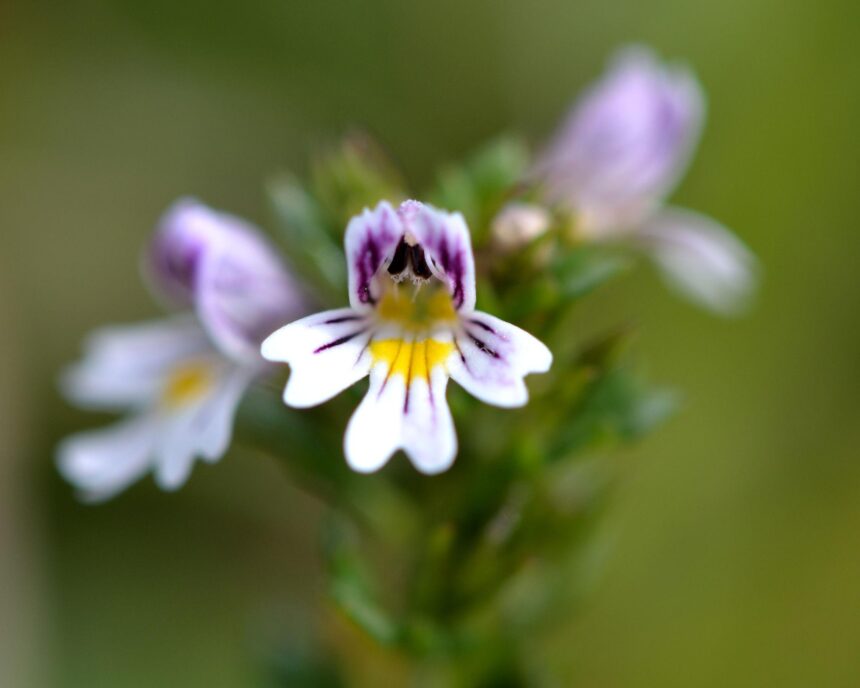
1) Plant Origin (Source & Identity)
- Botanical Name: Euphrasia officinalis
- Family: Orobanchaceae
- Common Name: Eyebright
- Natural Habitat: Native to Europe and Asia; thrives in grasslands and open spaces
- Part Used: Whole fresh plant
2) Extraction & Homeopathic Preparation
The fresh plant is macerated in alcohol to create the mother tincture (Q), which is then serially diluted and succussed to produce homeopathic potencies such as 30C and 200C.
Safety Note:
Potentized homeopathic Euphrasia is safe for use. Persistent or severe eye infections always require medical evaluation.
3) Core Sphere of Action
Euphrasia primarily influences:
- Eyes: irritation, redness, watering
- Respiratory tract: cold, cough
- Mucous membranes: inflammation, discharge
- Nose and sinuses: irritation, discharge
Central Theme:
Eye irritation marked by excessive watering and a burning sensation.
4) Characteristic Symptoms & Keynotes
- Profuse watery eye discharge
- Burning, stinging, or irritation in the eyes
- Red, inflamed eyes
- Sensitivity to light
- Eye discharge that causes irritation
- Colds accompanied by prominent eye symptoms
- Frequent blinking due to eye discomfort
Keynote:
Profuse watery eye discharge with irritation and burning.
5) Key Repertory Rubrics
- Eyes – watering – excessive
- Eyes – inflammation
- Eyes – burning
- Eyes – redness
- Cold – with eye symptoms
6) Comparative Remedies (Differentials)
| Feature | Euphrasia | Allium Cepa | Pulsatilla |
|---|---|---|---|
| Eye watering | Severe | Moderate | Moderate |
| Eye irritation | Marked | Moderate | Mild |
| Nasal discharge | Mild | Severe | Thick |
| Burning sensation | Strong | Moderate | Mild |
7) Therapeutic Uses in Homeopathy
Common (Subacute Conditions)
- Eye irritation
- Watery eyes
- Mild eye infections
- Colds with eye symptoms
Chronic Conditions
- Chronic eye irritation
- Recurrent conjunctivitis
Severe Conditions (Adjunct Only)
- Severe eye inflammation (always under medical supervision)
8) Constitutional Portrait (Who Benefits Most)
Euphrasia suits individuals who:
- Have excessive eye watering
- Experience burning eye irritation
- Suffer from red, inflamed eyes
- Have colds with eye symptoms
- Are sensitive to light
9) Potency & Practical Usage
| Potency | Pack Size | Clinical Role |
|---|---|---|
| 30C | 100 ml | Acute eye irritation and cold |
| 200C | 100 ml | Chronic or severe eye conditions |
Dosage Guidance:
- 30C: For acute eye conditions
- 200C: For chronic or severe cases, under supervision
- Repeat as clinically indicated; discontinue after improvement
10) Effects in Children & Seniors
Children:
- Useful for eye irritation and watering
- Helps with conjunctivitis symptoms
Seniors:
- Supports chronic eye irritation
- Promotes eye comfort
- Medical supervision is especially important
11) Clinical Insights
Euphrasia officinalis is a cornerstone homeopathic remedy for eye complaints, notably excessive watering and irritation. It is especially effective in conjunctivitis, eye inflammation, and colds with predominant eye symptoms. The remedy soothes mucous membranes and alleviates irritation and discharge, leading to reduced watering, redness, and discomfort.
Always seek proper medical assessment for severe eye conditions.
12) Sample Repertorization Chart
| Rubric | Euphrasia | Allium Cepa | Pulsatilla |
|---|---|---|---|
| Eye watering | 3 | 2 | 2 |
| Eye irritation | 3 | 2 | 1 |
| Eye redness | 3 | 2 | 2 |
| Eye inflammation | 3 | 2 | 2 |
| Cold with eye symptoms | 3 | 2 | 2 |
Conclusion
Euphrasia officinalis is an important homeopathic remedy for eye irritation, watering, and inflammation. Available in 30C and 200C potencies in 100 ml packs, it helps relieve eye discomfort and supports eye health.
Euphrasia officinalis is especially indicated when eye symptoms include excessive watering, burning sensation, redness, and sensitivity to light. It is often useful in cases of conjunctival irritation associated with colds, allergies, or environmental exposure such as dust and wind. Patients who benefit from this remedy may experience constant tearing that interferes with clear vision and daily comfort. By gently supporting the natural healing response of the eye tissues, Euphrasia helps reduce irritation and restore normal function without suppressing physiological processes.
Proper case assessment and professional guidance are important to ensure safe and effective use, particularly in persistent or severe eye conditions. Supportive measures such as maintaining eye hygiene, avoiding irritants, and seeking medical evaluation when necessary can further enhance recovery. When prescribed based on characteristic symptoms, Euphrasia officinalis remains a dependable homeopathic remedy for relieving eye inflammation, improving comfort, and supporting long-term ocular health and functional balance.