
1. Source Origin (Identity & Natural Source)
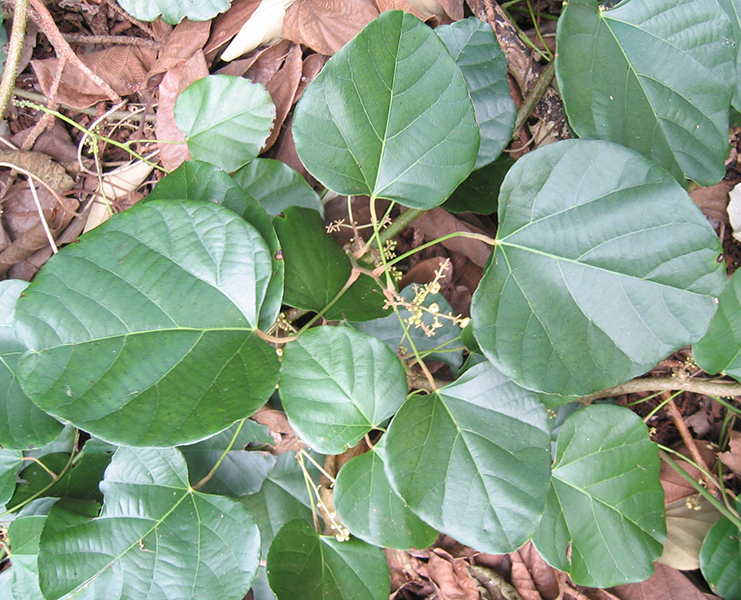
- Botanical Source: Chondrodendron tomentosum
- Family: Menispermaceae
- Common Name: Curare vine
- Habitat: Amazon rainforest, South America
- Source Material: Alkaloid-rich extracts from bark and roots
Clarification: Curare is a plant-derived homeopathic remedy, prepared from the toxic alkaloid extract obtained from South American lianas traditionally used as arrow poison.
2. Extraction & Homeopathic Preparation
The active alkaloid extract is first prepared as a mother tincture (Q), then serially diluted and succussed according to homeopathic pharmacopeial standards.
⚠️ Safety Note: Crude curare is a potent neuromuscular paralytic poison. Homeopathic potencies, when properly prepared, are highly diluted and safe for use.
3. Core Sphere of Action
Curare chiefly acts upon:
- Neuromuscular system
- Motor nerves
- Respiratory muscles
- Voluntary muscle control
Central Theme: Progressive muscular weakness and paralysis, with preserved sensation.
4. Characteristic Symptoms & Keynotes
- Gradually increasing muscular weakness
- Paralysis of voluntary muscles
- Difficulty with speech
- Drooping eyelids (ptosis)
- Respiratory muscle weakness
- Weakness without pain
- Preservation of mental clarity
Keynote:
“Motor paralysis with intact sensation.”
5. Key Repertory Rubrics
- Paralysis – progressive
- Muscles – weakness
- Speech – difficult
- Eyelids – ptosis
- Respiration – weakness
6. Comparative Remedies (Differential Diagnosis)
| Feature | Curare | Causticum | Gelsemium |
|---|---|---|---|
| Paralysis | Motor | Motor | Weakness |
| Sensation | Intact | Diminished | Dull |
| Ptosis | Marked | Mild | Moderate |
| Mental clarity | Preserved | Emotional | Dull |
7. Therapeutic Uses in Homeopathy
- Common (Subacute): Muscular weakness, early motor nerve dysfunction
- Chronic: Progressive neuromuscular weakness (adjunctive), speech difficulty, chronic motor paralysis
- Severe (Strictly Adjunctive): Respiratory muscle weakness (requires immediate medical supervision)
8. Constitutional Portrait (Who Benefits Most)
Curare is best suited to individuals who:
- Experience progressive muscle weakness
- Retain sensation but lose motor control
- Develop ptosis or speech weakness
- Show signs of neuromuscular degeneration
- Are under close medical supervision for neuromuscular disorders
9. Potency & Practical Usage
(As per your stock list)
| Potency | Pack Size | Clinical Role |
|---|---|---|
| 200C | 100 ml | Neuromuscular weakness (adjunctive) |
- High potencies are used cautiously
- Doses are given infrequently and under supervision
- Treatment is discontinued upon improvement
10. Effects in Children & Seniors
- Children: Rarely indicated; only as adjunct in neuromuscular disorders
- Seniors: Useful in progressive muscular weakness and motor impairment; requires medical monitoring
11. Clinical Insights
Curare is considered in cases of motor paralysis with preserved sensation—the patient can feel touch and pain but cannot move the affected muscle groups. This reflects its known action on motor nerve transmission. Unlike Causticum (which features contractures and emotional sensitivity), Curare produces flaccid weakness without emotional overlay. Improvement is gradual, marked by increased motor strength and improved respiratory function. Because these symptoms often indicate serious neurological disease, comprehensive medical oversight is essential.
12. Sample Repertorization Chart
| Rubric | Curare | Causticum | Gelsemium |
|---|---|---|---|
| Paralysis – motor | 3 | 3 | 2 |
| Ptosis | 3 | 1 | 2 |
| Weakness – muscular | 3 | 2 | 2 |
| Speech difficulty | 2 | 2 | 1 |
| Sensation preserved | 3 | 1 | 1 |
Conclusion
Curare occupies a specialized and noteworthy place in homeopathy for conditions characterized by progressive motor weakness and various forms of paralysis. Its keynote indication—marked motor dysfunction occurring alongside relatively preserved sensory perception—offers the homeopathic practitioner clear and distinctive prescribing guidance. In carefully selected cases that match the remedy picture, Curare is traditionally considered to support neuromuscular coordination and may assist in improving voluntary muscle control and functional stability.
However, it is essential to recognize that neuromuscular weakness and paralysis often signal serious underlying pathology requiring thorough medical investigation. For this reason, Curare should never be used as a standalone substitute for appropriate medical diagnosis, treatment, and monitoring. Instead, it is best viewed as a complementary homeopathic option to be employed judiciously within a broader, medically supervised care plan.
When prescribed in the appropriate potency and in accordance with the totality of symptoms, Curare may contribute to improved motor steadiness and patient comfort in suitable cases. Its historical significance and clearly defined sphere of action continue to secure it a respected position within the homeopathic materia medica. Used responsibly and with proper clinical judgment, Curare remains a valuable remedy for practitioners addressing select neuromuscular presentations.