
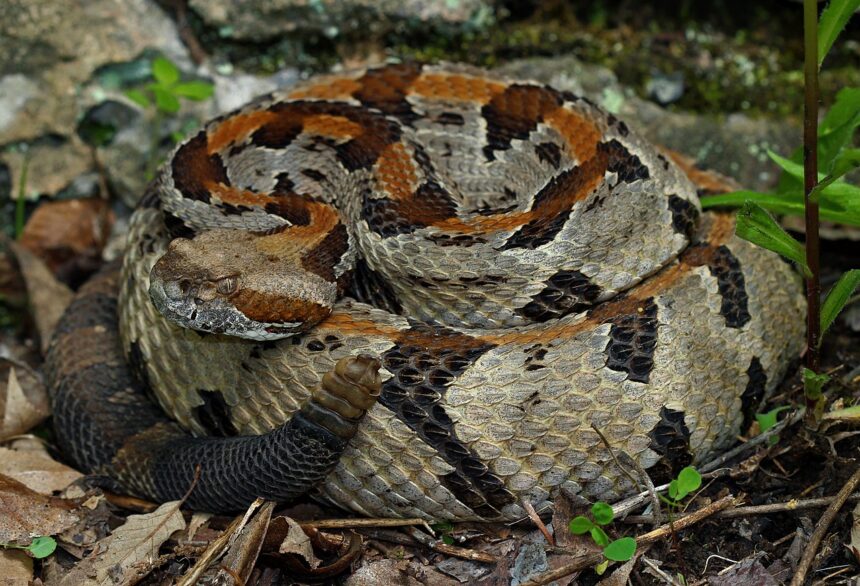
1. Source Origin (Identity & Natural Source)
- Zoological name: Crotalus horridus
- Common name: Timber Rattlesnake
- Class: Reptilia
- Habitat: Eastern United States
- Source material: Venom of the timber rattlesnake
2. Extraction & Homeopathic Preparation
The venom is obtained with great care and then triturated or dissolved in alcohol to create the initial substance. This is followed by serial dilution and succussion (vigorous shaking) according to established homeopathic pharmacopeial protocols.
Safety Note:
Snake venom is extremely toxic in its raw form. Homeopathic potencies are highly diluted and safe when produced by licensed pharmacies.
3. Core Sphere of Action
Crotalus horridus primarily targets:
- Blood and circulatory system
- Liver
- Nervous system
- Hemorrhagic tendencies
Central Theme:
Septic states characterized by hemorrhage and profound weakness.
4. Characteristic Symptoms & Keynotes
- Pronounced tendency to bleeding (dark, fluid blood)
- Septic fevers
- Jaundice with bleeding
- Extreme prostration
- Delirium
- Purpura
- Ecchymosis
Keynote: Dark hemorrhage with septic collapse.
5. Key Repertory Rubrics
- Hemorrhage – dark blood
- Blood – septic state
- Liver – enlargement
- Delirium – septic conditions
- Weakness – extreme
6. Comparative Remedies (Differential Diagnosis)
| Feature | Crotalus Horridus | Lachesis | Bothrops |
|---|---|---|---|
| Hemorrhage | Dark, fluid | Dark | Thrombotic |
| Septic states | Marked | Moderate | Vascular |
| Liver involvement | Strong | Moderate | Mild |
| Delirium | Present | Talkative | Less |
7. Therapeutic Uses in Homeopathy
Acute (Adjunctive Only)
- Septic fever
- Hemorrhagic diathesis
- Jaundice with marked weakness
Chronic
- Purpura
- Chronic liver congestion
- Bleeding disorders
Severe (Strictly Adjunctive)
- Septicemia
- Severe hemorrhage
Note: Such cases require immediate conventional medical intervention.
8. Constitutional Portrait (Indications)
Crotalus horridus is best suited for individuals who:
- Have a tendency to bleed easily
- Develop sepsis rapidly
- Suffer from liver congestion
- Exhibit dark, non-coagulating hemorrhage
Often indicated in severe systemic infections under medical supervision.
9. Potency & Practical Usage
| Potency | Pack Size | Clinical Role |
|---|---|---|
| 30C | 100 ml | Septic states and hemorrhagic tendency (adjunctive) |
Dosage Guidance:
- Use cautiously
- Only under professional supervision
- Stop use upon improvement
10. Use in Children & Seniors
- Children: Rarely indicated, except in severe septic states (adjunctive)
- Seniors: Used for hemorrhagic disorders or liver-related weakness; strict monitoring essential
11. Expanded Clinical Insights
Crotalus horridus is recognized for its powerful action in blood dyscrasias and septic conditions, particularly those marked by dark, fluid, non-coagulating hemorrhage. Unlike Lachesis (noted for talkativeness and left-sided symptoms), Crotalus emphasizes rapid septic deterioration and marked liver involvement.
It may be considered in cases like purpura or hemorrhagic jaundice, always with strict medical supervision. Clinical improvement is evidenced by reduced bleeding, improved liver function, and stabilization of vital signs. These presentations are often life-threatening and require integrated care with conventional medicine.
12. Sample Repertorization Chart
| Rubric | Crotalus | Lachesis | Bothrops |
|---|---|---|---|
| Hemorrhage – dark | 3 | 3 | 2 |
| Septic fever | 3 | 2 | 1 |
| Liver involvement | 3 | 2 | 1 |
| Weakness – collapse | 3 | 2 | 2 |
| Delirium | 2 | 3 | 1 |
This revised version presents the information in a clear, professional, and structured format suitable for clinical or educational use.
Conclusion
Crotalus Horridus occupies a significant role in homeopathy for conditions involving septic states and hemorrhagic tendencies. Its hallmark presentation—dark, fluid bleeding combined with profound weakness—provides clear prescribing guidance in appropriate clinical contexts. With a strong affinity for the blood and liver, it addresses systemic deterioration rather than localized inflammation.
Because conditions requiring Crotalus often involve serious pathology, its use must be integrated with immediate medical care and continuous monitoring. When applied judiciously and in the correct potency, it may support systemic stabilization. Used responsibly, Crotalus Horridus remains a powerful remedy within the homeopathic materia medica for hemorrhagic and septic conditions.
In clinical observation, Crotalus Horridus is often considered when symptoms reflect rapid systemic decline accompanied by mental dullness, confusion, or low vitality. Patients may present with a toxic appearance, jaundiced discoloration, or a tendency toward ecchymosis and spontaneous bleeding, indicating deep blood dyscrasia. The hemorrhage is typically dark, thin, and difficult to control, distinguishing it from bright, active bleeding. This remedy’s strong affinity for hepatic and hematologic disturbances further emphasizes its role in conditions where blood integrity is compromised. In keeping with homeopathic principles, its selection depends upon the totality of symptoms rather than pathology alone, underscoring the individualized nature of prescribing even in severe clinical scenarios.