
1. Plant Origin (Source & Identity)
- Botanical Name: Conium maculatum
- Family: Apiaceae
- Common Names: Poison Hemlock
- Natural Habitat: Europe, North America, temperate regions
- Part Used: Fresh whole plant, harvested before flowering
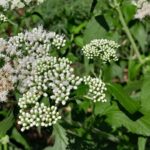
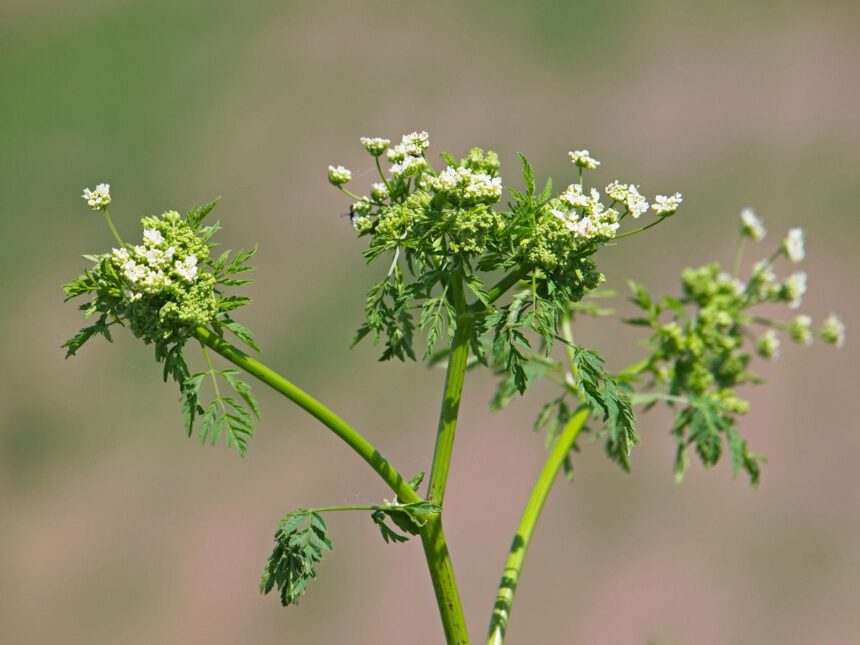
Conium maculatum is the source of the homeopathic remedy Conium. It is recognized by its tall stature, purple-spotted stems, and umbrella-shaped clusters of small white flowers.
2. Extraction & Homeopathic Preparation
- The entire plant is collected before flowering and macerated in alcohol to make the mother tincture (Q).
- This tincture is then potentized through serial dilution and succussion according to classical homeopathic pharmacopeias.
Note: Poison Hemlock is extremely toxic in its raw form. Homeopathic preparations are safe when properly diluted and prepared by professionals.
3. Core Sphere of Action
- Primary Systems Affected:
- Glandular system
- Nervous system
- Breast and reproductive organs
- Lymphatic tissues
- Central Theme:
- Hard, stony glandular induration with progressive weakness
4. Characteristic Symptoms & Keynotes
- Hard, stony glandular swellings
- Vertigo, especially on turning the head or rolling in bed
- Gradual, progressive muscle weakness
- Complaints following sexual suppression
- Breast lumps; enlarged lymph nodes
- Slow, insidious onset of symptoms
- Keynote: Induration of glands with vertigo on turning.
5. Key Repertory Rubrics
- Glands- indurated
- Vertigo- turning in bed
- Breast- tumors, hard
- Sexual- suppressed desire
- Weakness- progressive
6. Comparative Remedies (Differentials)
| Feature | Conium | Cistus | Phytolacca |
|---|---|---|---|
| Gland hardness | Stony | Indurated | Inflamed |
| Vertigo turning | Marked | Mild | Rare |
| Breast lumps | Common | Less | Painful |
| Progression | Slow | Moderate | Acute |
7. Therapeutic Uses in Homeopathy
- Common (Subacute Conditions):
- Cervical gland enlargement
- Vertigo in the elderly
- Breast tenderness
- Chronic Conditions:
- Breast tumors (adjunctive)
- Prostate enlargement
- Chronic lymph node induration
- After-effects of sexual suppression
- Severe Conditions (Adjunctive Only):
- Suspicious glandular tumors (requires medical diagnosis and monitoring)
8. Constitutional Portrait (Patient Profile)Conium is best suited for individuals who:
- Develop slow-growing, hard glandular swellings
- Experience vertigo, especially on turning
- Show suppressed emotional or sexual expression
- Suffer from progressive muscular weakness
- Are typically middle-aged or elderly
9. Potency & Practical Usage
| Potency | Pack Size | Clinical Role |
|---|---|---|
| 30C | 100 ml | Early glandular swelling |
| 200C | 100 ml | Chronic induration |
| 1M | 60 ml | Deep glandular disorders |
| 10M | 30 ml | Long-standing constitutional states |
| 50M | 30 ml | Advanced chronic cases |
| CM | 30 ml | Deep, long-term glandular pathology |
Dosage Guidance
Stop once improvement begins
Chronic cases: infrequent repetition
High potencies: single doses under supervision
10. Effects in Children & Seniors
- Children: Rarely needed; occasional use for glandular swellings.
- Seniors: Useful for vertigo, prostate enlargement, hard lymph nodes. Regular medical supervision is essential.
11. Clinical Insights
Conium is a cornerstone remedy for hard, non-inflammatory glandular indurations and slow, progressive, painless swellings (in contrast to remedies for acute inflammation). Vertigo on turning the head is a distinguishing symptom. Conium is often indicated for conditions following suppression, particularly sexual suppression, leading to glandular pathology. Improvement is gradual, with softening of indurations and decreased vertigo. Integration with medical evaluation is vital in serious cases.
12. Sample Repertorization Chart
| Rubric | Conium | Cistus | Phytolacca |
|---|---|---|---|
| Glands – indurated | 3 | 3 | 1 |
| Vertigo – turning | 3 | 1 | 0 |
| Breast – hard tumor | 3 | 1 | 2 |
| Weakness – progressive | 3 | 1 | 1 |
| Suppression effects | 3 | 1 | 1 |
Conclusion
Conium maculatum remains a vital remedy in homeopathy for managing chronic glandular induration and progressive weakness. Its hallmark presentation—slowly developing, hard swellings combined with vertigo on turning—provides a clear and reliable prescribing guide. Unlike acute inflammatory remedies, Conium addresses long-standing structural changes.
When prescribed in the appropriate potency and carefully monitored, Conium can support gradual tissue normalization and reduce associated neurological symptoms. Because many Conium cases involve serious glandular conditions, thorough medical evaluation and ongoing follow-up are essential. Used responsibly and judiciously, Conium Mac. remains a significant remedy for restoring glandular balance and long-term functional health.