
1. Source Origin & Identity
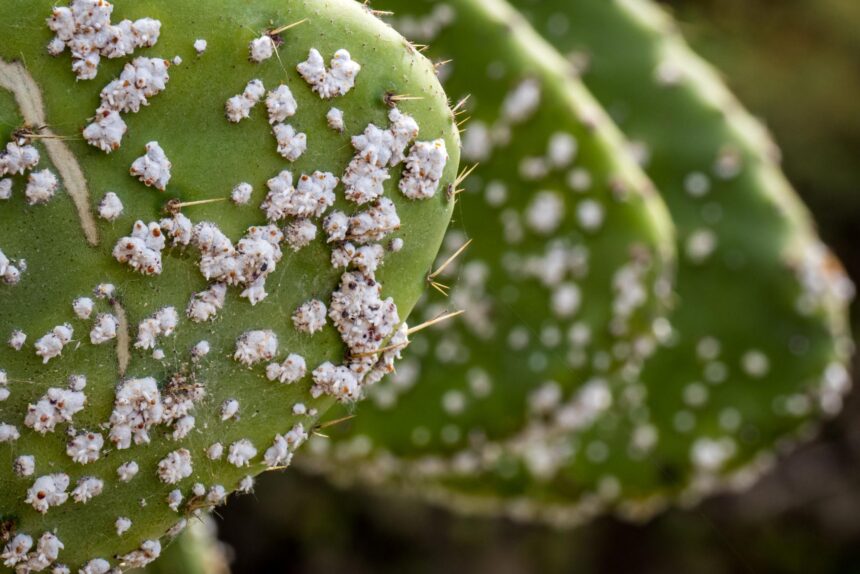
- Remedy name: Coccus cacti
- Natural source: Cochineal insect (dried female insects)
- Zoological classification: Insecta
- Host plant: Opuntia species (prickly pear cactus)
- Geographical origin: Central and South America
2. Extraction & Homeopathic Preparation
- The dried insects are triturated with lactose to prepare the base material.
- Serial dilution and succussion per classical homeopathic pharmacopeial standards yield centesimal potencies.
Safety Note: While crude cochineal contains carminic acid, homeopathic potencies are highly diluted and entirely safe if prepared by licensed pharmacies.
3. Core Sphere of Action
- Primary action: Respiratory system, mucous membranes, throat, and larynx
- Secondary action: Digestive tract
- Central theme: Spasmodic cough with thick, ropy, stringy mucus
4. Characteristic Symptoms & Keynotes
- Violent, spasmodic coughing fits
- Cough worse at night and early morning
- Thick, tenacious, stringy (ropy) expectoration
- Sensation of something hanging in the throat
- Gagging or retching with cough
- Hoarseness
- Difficulty breathing due to mucus
Keynote:
Cough with long, tough, ropy mucus.
5. Key Repertory Rubrics
- Cough: spasmodic
- Expectoration: ropy, stringy
- Throat: sensation of something hanging
- Cough: with gagging
- Respiration: difficult from mucus
6. Comparative Remedies (Differential Diagnosis)
| Feature | Coffea Cruda | Nux vomica | Ignatia |
|---|---|---|---|
| Excitability | Joyful | Irritable | Emotional |
| Sleeplessness | Racing thoughts | Overwork | Grief |
| Pain sensitivity | Extreme | Moderate | Variable |
| Emotional state | Elated | Angry | Changeable |
7. Therapeutic Uses in Homeopathy
- Acute conditions:
- Spasmodic cough
- Whooping cough
- Laryngitis with thick mucus
- Chronic conditions:
- Chronic bronchitis
- Recurrent cough with viscid expectoration
- Post-infectious cough
- Severe conditions (adjunctive only):
- Severe coughing spells causing vomiting
- Requires medical supervision
8. Constitutional Portrait (Who Benefits Most)
Coccus cacti is especially indicated for individuals who:
- Produce thick, ropy mucus
- Experience violent, exhausting coughing spells
- Suffer from choking or gagging during cough
- Have frequent respiratory infections
Often suited for both children and adults with a tendency toward chronic cough.
9. Potency & Practical Usage
| Potency | Pack Size | Clinical Role |
|---|---|---|
| 30C | 100 ml | Acute sleeplessness, excitement |
| 200C | 100 ml | Chronic nervous excitability |
- Dosage guidance:
- Acute: short-term repetition
- Chronic: infrequent dosing
- Discontinue use once cough subsides
10. Effects in Children & Seniors
- Children:
- Whooping cough
- Nighttime coughing spells
- Gagging on mucus
- Seniors:
- Chronic bronchial cough
- Thick expectoration
- Respiratory weakness
Close observation during use is recommended.
11. Clinical Insights
Coccus cacti is a reliable remedy for spasmodic coughs with thick, tenacious, string-like mucus. The cough is often violent, exhausting, and accompanied by gagging or retching. Unlike Drosera (dry, barking cough), Coccus cacti is marked by significant mucus production that can obstruct breathing.
A strong confirmatory symptom is the sensation of something hanging in the throat. Improvement is typically observed as mucus becomes less viscous, coughing subsides, and breathing improves. Dose spacing should be managed carefully to avoid aggravations.
12. Sample Repertorization Chart
| Rubric | Coffea Cruda | Nux vomica | Ignatia |
|---|---|---|---|
| Insomnia – thoughts | 3 | 2 | 2 |
| Mental excitability | 3 | 2 | 2 |
| Pain sensitivity | 3 | 2 | 1 |
| Palpitations | 2 | 2 | 1 |
| Emotional excitement | 3 | 1 | 2 |
Conclusion
Coccus cacti plays a vital role in homeopathy for treating respiratory conditions marked by violent coughing and thick, tenacious mucus. Its action is particularly valuable when expectoration is stringy and difficult to expel, causing choking or gagging sensations. By addressing both the spasm and the mucus quality, the remedy supports more comfortable breathing and gradual symptom relief.
When prescribed in the correct potency and monitored carefully, Coccus cacti can significantly reduce cough severity and frequency. Because chronic respiratory conditions may recur, integration with medical evaluation and lifestyle support is essential. Used judiciously, Coccus cacti remains a dependable remedy for restoring respiratory comfort and functional balance.
Coccus cacti also demonstrates the importance of recognizing characteristic modalities in respiratory prescribing. Patients who benefit from this remedy often experience worsening symptoms at specific times, such as early morning, or from exposure to cold air, while relief may follow the loosening of mucus. Careful observation of these patterns helps ensure accurate remedy selection. By gently regulating mucus production and reducing reflex irritation of the airways, Coccus cacti promotes steadier recovery without suppressing natural expectoration. With appropriate follow-up and supportive care, it continues to serve as a focused yet effective option in managing persistent spasmodic coughs.