
1) Plant Origin (Source & Identity)
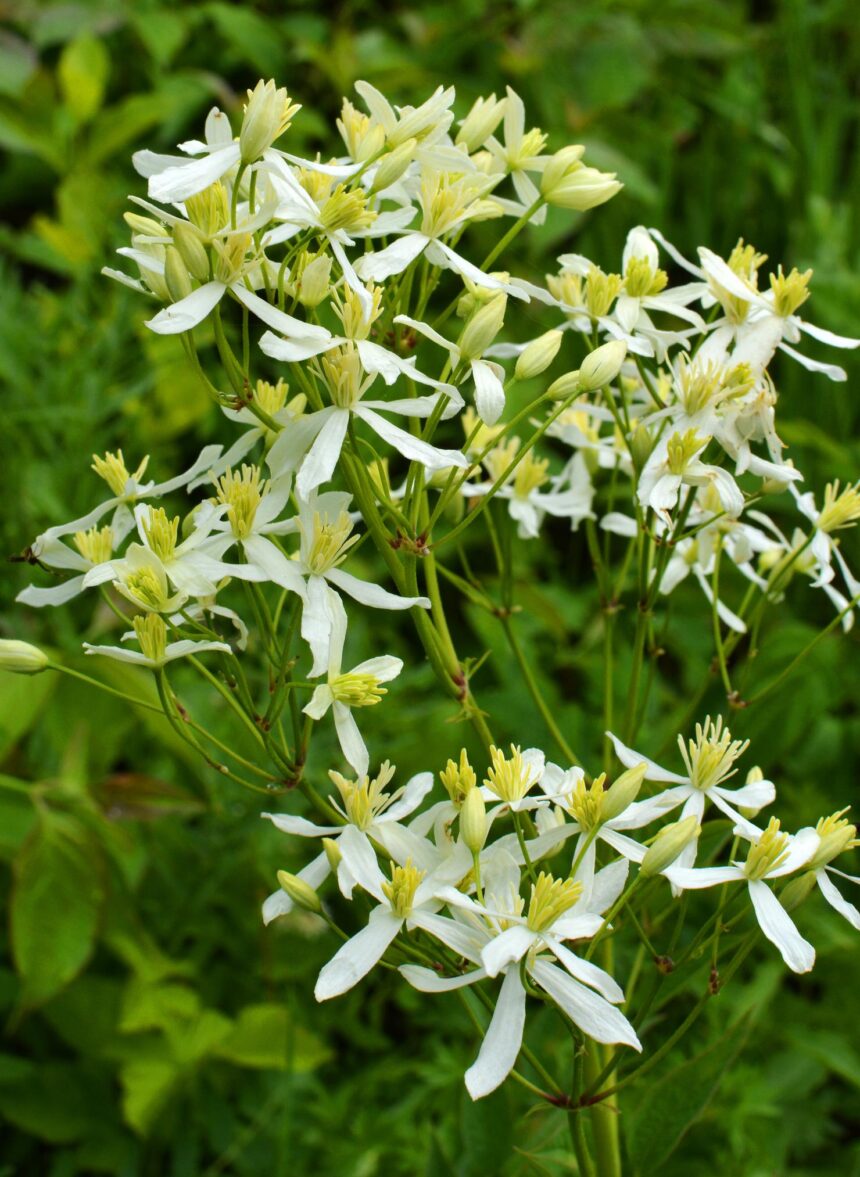
- Botanical name: Clematis erecta
- Family: Ranunculaceae
- Common names: Upright Virgin’s Bower
- Habitat: Native to Europe and parts of Asia, found in dry meadows and woodland edges
- Part used: Fresh leaves and stems
2) Extraction & Homeopathic Preparation
The fresh leaves and stems are harvested during flowering and macerated in alcohol to create the mother tincture (Q). This tincture is then serially diluted and succussed according to established homeopathic pharmacopeial standards, yielding centesimal potencies.
Safety note: The unprocessed, fresh plant is irritant and toxic. Homeopathic preparations are highly diluted and considered safe when produced by licensed pharmacies.
3) Core Sphere of Action
Clematis Er. primarily acts on:
- Male genitourinary system
- Skin
- Lymphatic system
- Nervous system
Central Theme: Inflammation with hardness, induration, and extreme sensitivity to cold.
4) Characteristic Symptoms & Keynotes
- Testicular pain and swelling
- Induration of glands
- Drawing, tearing pains
- Symptoms worse at night
- Marked aggravation from cold
- Skin eruptions with thick crusts
- Urethral irritation and burning
Keynote: “Indurated glands and genitourinary pain, worse from cold.”
5) Key Repertory Rubrics
- Testes – pain – drawing
- Glands – indurated
- Urination – burning
- Skin – eruptions – crusty
- Generalities – cold – aggravates
6) Comparative Remedies (Differentials)
| Feature | Clematis Er. | Pulsatilla | Rhododendron |
|---|---|---|---|
| Testicular pain | Drawing, indurated | Congestive | Worse before storm |
| Cold aggravation | Marked | Mild | Marked |
| Induration | Strong | Mild | Moderate |
| Discharge | Minimal | Profuse | Minimal |
7) Therapeutic Uses in Homeopathy
Common (Subacute Conditions)
- Orchitis
- Epididymitis
- Urethral irritation
Chronic Conditions
- Chronic testicular induration
- Recurrent genitourinary inflammation
- Indurated lymph glands
Severe Conditions (Adjunctive Only)
- Persistent genitourinary swelling
Medical evaluation required.
8) Constitutional Portrait (Who Benefits Most)
Clematis Er. is especially suited for individuals who:
- Are sensitive to cold
- Develop induration rather than suppuration
- Experience symptom aggravation at night
- Have genitourinary complaints with skin symptoms
- Most often indicated in young to middle-aged men
9) Potency & Practical Usage
| Potency | Pack Size | Clinical Role |
|---|---|---|
| 30C | 100 ml | Acute genitourinary inflammation |
| 200C | 100 ml | Chronic induration and glandular states |
Dosage Guidance:
- Acute cases: short-term repetition
- Chronic cases: infrequent dosing
- Discontinue once induration subsides
10) Effects in Children & Seniors
Children:
- Rarely indicated
- Occasional glandular swelling
Seniors:
- Chronic glandular induration
- Genitourinary discomfort
- Regular follow-up recommended
11) Clinical Insights
Clematis Er. stands out as a key remedy for persistent male genitourinary inflammation with hardness and induration. Pains are typically drawing or tearing, worsened by cold and at night. In contrast to Pulsatilla, which produces congestive swelling and bland discharge, Clematis Er. is marked by firm, sensitive tissues and minimal discharge.
This remedy proves especially valuable when inflammation becomes chronic and doesn’t resolve fully. Skin eruptions with thick crusts or glandular involvement further confirm its selection. Clinical improvement is usually gradual, seen as reduced pain, softening of indurated tissue, and better tolerance to cold. Proper potency and patience are crucial for optimal results.
12) Sample Repertorization Chart
| Rubric | Clematis Er. | Pulsatilla | Rhododendron |
|---|---|---|---|
| Testicular pain | 3 | 2 | 2 |
| Induration | 3 | 1 | 2 |
| Cold aggravation | 3 | 1 | 3 |
| Night aggravation | 3 | 2 | 1 |
| Skin crusts | 2 | 1 | 0 |
Conclusion
Clematis erecta holds a distinct and valuable place in homeopathy for conditions involving induration and chronic inflammation of the genitourinary system. Its action is particularly suited to cases where tissues become hard, sensitive, and painful rather than suppurative. By addressing both glandular and skin manifestations, Clematis Er. supports gradual resolution and tissue normalization.
When prescribed thoughtfully with appropriate potency and adequate observation intervals, Clematis Er. can significantly reduce pain, soften indurated structures, and prevent progression to chronic damage. Because such conditions often evolve slowly, consistent follow-up and integration with medical evaluation are essential. Used responsibly, Clematis Er. remains a reliable remedy for restoring genitourinary balance and long-term functional health.