
1. Plant Origin and Source
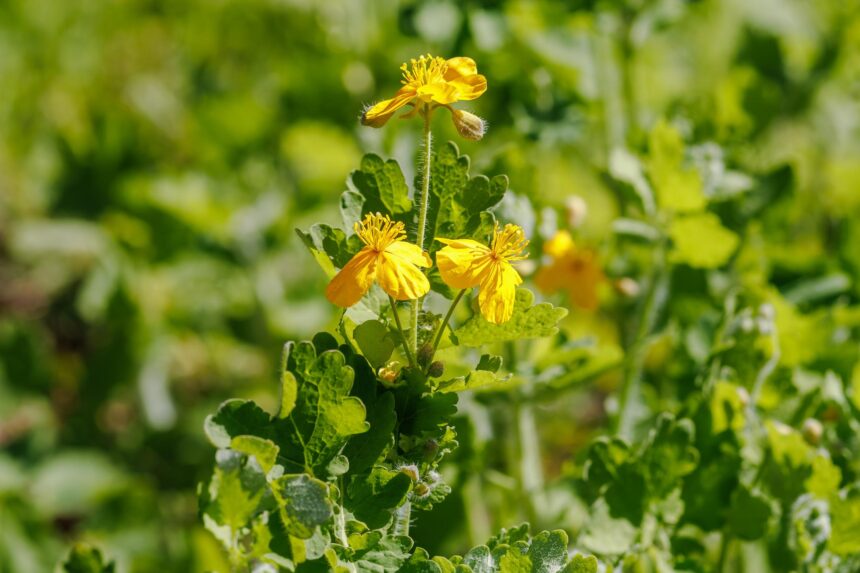
- Botanical name: Chelidonium majus
- Family: Papaveraceae
- Common name: Greater Celandine
- Natural habitat: Native to Europe and Western Asia; now naturalized worldwide
- Part used: Fresh whole plant, especially the distinctive yellow latex
2. Extraction & Homeopathic Preparation
- The fresh, flowering plant is harvested and macerated in alcohol to produce the mother tincture (Q).
- Serial dilution and succussion, per classical homeopathic pharmacopeia, yield the potentized remedy.
Safety Note: The crude latex is toxic. Homeopathic Chelidonium, prepared through high dilution, is safe for use when made according to standard practices.
3. Core Sphere of Action
- Primary action: Liver and gallbladder, digestive tract, respiratory system, right side of the body
- Central theme: Hepatic congestion with right-sided pain and notable digestive disturbances
4. Characteristic Symptoms & Keynotes
- Right upper abdominal pain
- Pain radiating to the right shoulder blade (keynote)
- Yellowish skin or sclera (jaundice tendency)
- Clay-colored stools
- Bitter taste in the mouth
- Nausea associated with liver complaints
- Symptoms relieved by hot drinks
Keynote:
Liver pain radiating to the right scapula
5. Key Repertory Rubrics
- Liver pain, right side
- Abdomen pain, right hypochondrium
- Stool, clay-colored
- Jaundice
- Shoulder pain, right
6. Comparative Remedies (Differentials)
| Feature | Chelidonium | Lycopodium | Bryonia |
|---|---|---|---|
| Side affected | Right | Right | Right |
| Liver pain | Radiating | Congested | Sharp |
| Stool color | Clay | Variable | Normal |
| Relief | Heat | Warm drinks | Rest |
7. Therapeutic Uses in Homeopathy
Acute conditions:
- Acute liver congestion
- Gallbladder colic
- Digestive upset with right-sided pain
Chronic conditions:
- Functional chronic hepatitis
- Gallbladder dysfunction
- Chronic jaundice tendency
- Supportive in fatty liver
Severe conditions (adjunctive only, with supervision):
- Severe hepatic disorders
8. Constitutional Portrait (Indication Profile)
Chelidonium suits individuals who:
- Have sluggish liver function
- Present with right-sided complaints
- Experience digestive heaviness
- Improve with warmth
Often indicated for sedentary people with hepatic overload.
9. Potency & Practical Usage
| Potency | Pack Size | Clinical Role |
|---|---|---|
| 3X | 100 ml | Liver congestion, digestive weakness |
| 30C | 100 ml | Acute hepatic pain |
| 200C | 100 ml | Chronic liver dysfunction |
| 1M | 60 ml | Deep constitutional liver issues |
| 10M | 30 ml | Long-standing cases (expert use) |
Dosage guidance:
- Acute: short-term repetition
- Chronic: infrequent dosing
- Discontinue once symptoms stabilize
10. Effects in Children & Seniors
- Children: Digestive intolerance, bilious vomiting
- Seniors: Chronic liver congestion, gallbladder sluggishness
- Regular monitoring is recommended
11. Clinical Insights
Chelidonium is a cornerstone remedy for functional liver and gallbladder disorders, especially when pain extends to the right scapula—a rare and distinguishing feature. Unlike Lycopodium (noted for flatulence and anxiety), Chelidonium focuses on hepatic congestion and bile flow issues. Patients often report heaviness, sluggish digestion, and nausea, especially after fatty foods. Improvement is marked by diminished pain, normalized stool color, improved appetite, and overall digestive comfort. Its organ-specific action makes it most effective when liver pathology dominates the case.
12. Sample Repertorization Chart
| Rubric | Chelidonium | Lycopodium | Bryonia |
|---|---|---|---|
| Liver pain – right | 3 | 2 | 2 |
| Pain to right scapula | 3 | 0 | 1 |
| Clay-colored stool | 3 | 1 | 0 |
| Jaundice | 2 | 1 | 0 |
| Relief from heat | 2 | 2 | 1 |
Conclusion
Chelidonium holds a central role in homeopathy for conditions involving liver and gallbladder dysfunction. Its precise affinity for the right side of the body and its characteristic radiation of pain to the shoulder blade make it highly reliable when correctly indicated. Rather than merely addressing digestive discomfort, Chelidonium supports functional liver balance and bile regulation.
When prescribed with appropriate potency and adequate observation intervals, Chelidonium can significantly improve digestive efficiency, reduce hepatic congestion, and restore overall vitality. Because liver disorders often require long-term management, Chelidonium should be integrated responsibly with dietary regulation, lifestyle modification, and medical evaluation. Its careful use can contribute meaningfully to sustained hepatic health and improved quality of life.
Chelidonium is an essential homeopathic remedy for liver and biliary disorders, with a particular affinity for right-sided symptoms and pain radiating to the right scapula. Its effectiveness is most notable in cases with hepatic congestion, jaundice, and digestive disturbances, setting it apart from other liver remedies.