

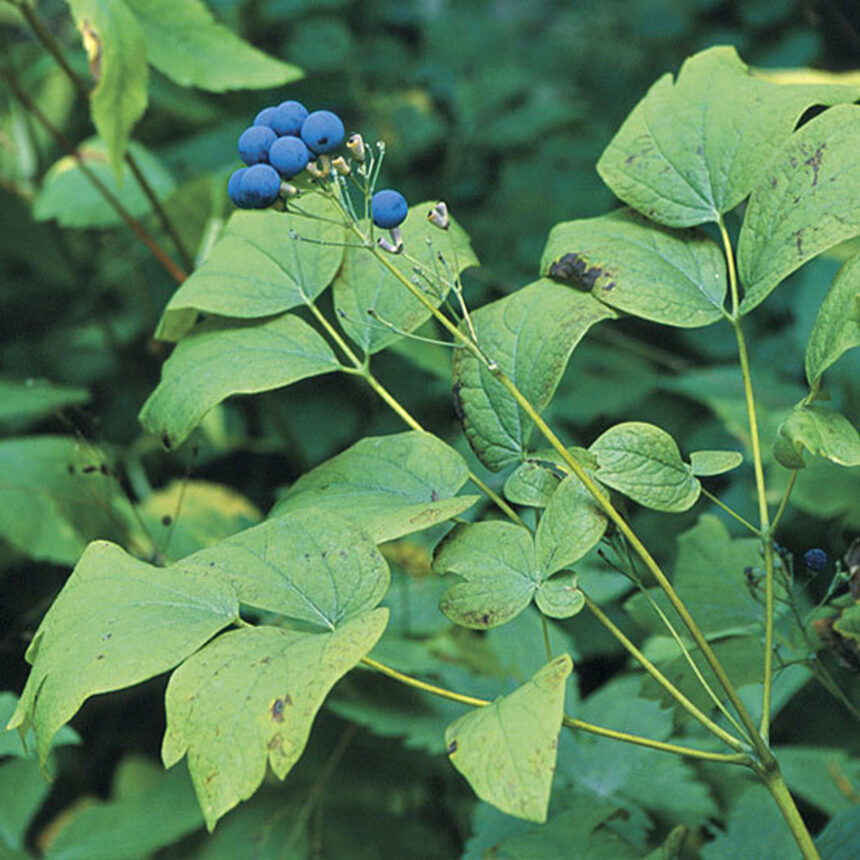
1. Plant Origin (Source & Identity)
- Botanical Name: Caulophyllum thalictroides
- Family: Berberidaceae
- Common Names: Blue Cohosh, Papoose Root
- Natural Habitat: Eastern North America
- Part Used: Fresh root and rhizome
2. Extraction & Homeopathic Preparation
The fresh root and rhizome are harvested, then macerated in alcohol to create the mother tincture (Q). This tincture is further potentized through serial dilution and succussion, following classical homeopathic pharmacopeial standards.
Safety Note:
Crude Blue Cohosh is potentially toxic. Homeopathic preparations (potencies) are highly diluted and safe when produced by licensed pharmacies.
3. Core Sphere of Action
Caulophyllum chiefly affects:
- The female reproductive system
- The uterus
- Muscles and ligaments
- Small joints
Central Theme: Spasmodic weakness with lack of coordinated muscular action
4. Characteristic Symptoms & Keynotes
- Weak, spasmodic uterine contractions
- False labor pains
- Prolonged or inefficient labor
- Bearing-down pains with exhaustion
- Small joint pains (especially fingers and wrists)
- Rheumatic stiffness with weakness
- Trembling and lack of muscular tone
Keynote: Uterine inertia with spasmodic, ineffective effort.
5. Key Repertory Rubrics
- Female genitalia – labor pains – weak
- Uterus – inertia
- Pains – spasmodic
- Extremities – small joints – rheumatism
- Generalities – weakness – muscular
6. Comparative Remedies (Differential Diagnosis)
| Feature | Caulophyllum | Actea racemosa | Sepia |
|---|---|---|---|
| Labor pains | Weak, spasmodic | Violent, neuralgic | Exhausted |
| Uterine tone | Poor | Irritable | Relaxed |
| Mental state | Calm | Nervous | Indifferent |
| Joint pain | Small joints | Large muscles | Minimal |
7. Therapeutic Uses in Homeopathy
Acute Conditions
- False labor pains
- Weak uterine contractions
- Menstrual cramps with spasms
Chronic Conditions
- Uterine inertia
- Dysmenorrhea with weakness
- Rheumatic pains of fingers and wrists
Severe Conditions (Adjunctive Only)
- Prolonged labor due to uterine weakness
Must be managed with obstetric supervision.
8. Constitutional Portrait (Who Benefits Most)
Caulophyllum is best suited for individuals who:
- Are physically weak rather than inflamed
- Exhibit poor muscular coordination
- Experience spasms without strength
- Are calm but exhausted
- Are often delicate or fatigued women
9. Potency & Practical Usage
| Potency | Pack Size | Clinical Role |
|---|---|---|
| 3X | 100 ml | Uterine weakness, menstrual spasms |
| 200C | 100 ml | Deep uterine inertia, chronic cases |
Dosage Guidance:
- Acute obstetric use: short-term, with supervision
- Chronic gynecological cases: infrequent dosing
- Discontinue once coordinated contractions resume
10. Effects in Children & Seniors
Children: Rarely indicated
Seniors: May help with rheumatic pain of small joints and muscular weakness. Careful observation is advised.
11. Clinical Insights
Clinically, Caulophyllum is a reliable remedy for inefficient or uncoordinated uterine activity. Unlike Actea racemosa, which presents with violent, distressing pains, Caulophyllum’s contractions are weak, spasmodic, and lead to exhaustion without progress—the uterus is unable to sustain effective effort.
This remedy is also valuable in non-obstetric cases, especially in rheumatism of the small joints where weakness and stiffness predominate over inflammation. Improvement is marked by restored muscular coordination, reduction of spasm, and increased strength. Since Caulophyllum mainly addresses functional weakness, it should be differentiated from remedies suited to inflammatory or congestive states.
12. Sample Repertorization Chart
| Rubric | Caulophyllum | Actea rac | Sepia |
|---|---|---|---|
| Labor pains – weak | 3 | 1 | 2 |
| Uterine inertia | 3 | 1 | 2 |
| Spasmodic pains | 3 | 2 | 1 |
| Small joint rheumatism | 3 | 1 | 0 |
| Muscular weakness | 3 | 1 | 2 |
Conclusion
Caulophyllum occupies an important place in homeopathy for conditions marked by muscular weakness and lack of coordinated effort, particularly within the female reproductive system. Its action is neither stimulating nor suppressive but restorative, helping weakened muscles regain functional efficiency. When used appropriately, it can support smoother labor progress, reduce unnecessary exhaustion, and alleviate spasmodic gynecological discomfort.
Beyond obstetrics, its usefulness in small-joint rheumatism highlights its broader action on muscular and ligamentous weakness. Correct potency selection and professional supervision are essential, especially in labor-related cases. When integrated responsibly with modern medical care, Caulophyllum remains a valuable remedy for restoring strength, coordination, and functional balance.
In long-term practice, Caulophyllum also helps prevent recurrence of uterine inefficiency by strengthening muscular coordination over time. Regular follow-up ensures sustained improvement, avoids unnecessary repetition, and supports stable functional recovery without overstimulation.