

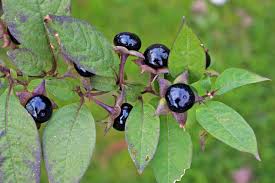
1. Plant Origin (Source & Identity)
- Botanical Name: Atropa belladonna
- Family: Solanaceae
- Common Names: Deadly Nightshade
- Natural Habitat: Europe, North Africa, Western Asia
- Part Used: Fresh leaves and flowering tops
2. Extraction & Homeopathic Preparation
The fresh leaves and flowering tops are harvested and macerated in alcohol to prepare the mother tincture (Q). Homeopathic remedies are then produced from this tincture through serial dilution and succussion, as per classical homeopathic pharmacopeia, yielding a range of potencies.
Safety Note: Crude Belladonna is highly toxic. Homeopathic preparations, however, are extremely diluted and safe when produced by licensed manufacturers.
3. Core Sphere of Action
Belladonna primarily affects:
- The central nervous system
- The brain and circulation
- Skin and mucous membranes
- Inflammatory processes
Central Theme:
Sudden, violent inflammation characterized by heat, redness, throbbing, and marked hypersensitivity.
4. Characteristic Symptoms & Keynotes
- Sudden onset of symptoms
- Intense heat and redness
- Throbbing pain
- Extreme sensitivity to light, noise, and touch
- Dryness of mucous membranes
- High fever, often with delirium
5. Key Repertory Rubrics
Mind:
- Delirium
- Violence
- Sudden excitement
- Fearful hallucinations
Generalities:
- Sudden onset
- Worse from light, noise, or touch
- Worse in the afternoon and at night
Head:
- Throbbing headache
- Congestion
6. Comparative Remedies
| Feature | Belladonna | Aconite | Stramonium | Hyoscyamus |
|---|---|---|---|---|
| Onset | Sudden | Sudden | Sudden | Gradual |
| Heat | Intense | Moderate | Intense | Variable |
| Delirium | Violent | Fearful | Terrifying | Silly |
| Sensitivity | Extreme | Marked | Marked | Moderate |
7. Therapeutic Uses in Homeopathy
Acute Conditions:
- High fever with flushed face
- Acute tonsillitis
- Otitis media
- Headaches with congestion
Chronic Conditions:
- Recurrent inflammatory episodes
- Migraines with throbbing pain
- Chronic sinus congestion
Severe Conditions (Adjunctive only):
- Early-stage meningitis
- Encephalitis
- Severe infections with cerebral congestion
Immediate medical attention is crucial for severe illnesses.
8. Constitutional Portrait
- Plethoric (robust, full-blooded) individuals
- Strong reactions to illness
- Rapid, intense symptom development
- Sensitive nervous system
Belladonna is best suited for acute, hyper-reactive inflammatory states rather than chronic debility.
9. Potency & Practical Usage
| Potency | Pack Size | Clinical Role |
|---|---|---|
| 3X | 100 ml | Early inflammation, fever |
| 30C | 100 ml | Acute inflammatory states |
| 200C | 100 ml | Severe acute congestion |
| 1M | 60 ml | Intense acute states (expert use) |
Dosage Guidance: Repeat doses cautiously in acute cases. Discontinue upon improvement.
10. Effects in Children & Seniors
Children:
- High fever with delirium
- Acute ear and throat infections
Seniors:
- Acute inflammatory states
- Hypertensive congestion
Close monitoring is essential in both age groups.
11. Clinical Insights
Belladonna is among the most frequently prescribed remedies for acute inflammatory crises. Key features include the suddenness and intensity of symptoms: patients appear flushed, hot, and restless, with dilated pupils and throbbing pains. Mental symptoms can range from irritability to pronounced delirium and hallucinations.
A defining clinical hallmark is hypersensitivity- even gentle noise, light, or touch worsens symptoms. Belladonna is especially valuable in early-stage inflammation, prior to the development of pus or chronic changes. If the illness progresses to sluggishness or dullness, alternative remedies may be indicated.
When correctly prescribed, Belladonna often brings rapid relief, especially noted by a decrease in heat, pain, and congestion.
12. Sample Repertorization Chart
| Rubric | Belladonna | Aconite | Stramonium | Hyoscyamus |
|---|---|---|---|---|
| Sudden onset | 3 | 3 | 3 | 2 |
| Intense heat | 3 | 2 | 3 | 2 |
| Delirium | 3 | 1 | 3 | 2 |
| Sensitivity | 3 | 2 | 2 | 1 |
| Throbbing pain | 3 | 2 | 1 | 1 |
Belladonna remains a cornerstone remedy for acute inflammatory conditions characterized by sudden onset, intense heat, and nervous system involvement. When selected early and monitored carefully, it can rapidly relieve symptoms and prevent progression to deeper pathology.
Belladonna’s value lies in its precise correspondence to acute, violent inflammatory states that arise suddenly and progress rapidly. Timely recognition of its key indicators- sudden onset, intense heat, redness, throbbing pain, and sensory hypersensitivity- allows for early intervention before deeper tissue involvement occurs. Careful potency selection, appropriate repetition, and close clinical observation are essential, especially in children and elderly patients. When integrated responsibly alongside conventional medical care, Belladonna can play a supportive role in stabilizing acute inflammatory episodes and restoring functional balance.