
1. Plant Origin (Source & Identity)
- Botanical name: Arum triphyllum
- Family: Araceae
- Common names: Jack-in-the-Pulpit, Indian Turnip
- Natural habitat: Moist woodlands of North America
- Part used: Fresh root (corm)
Source Confirmation:
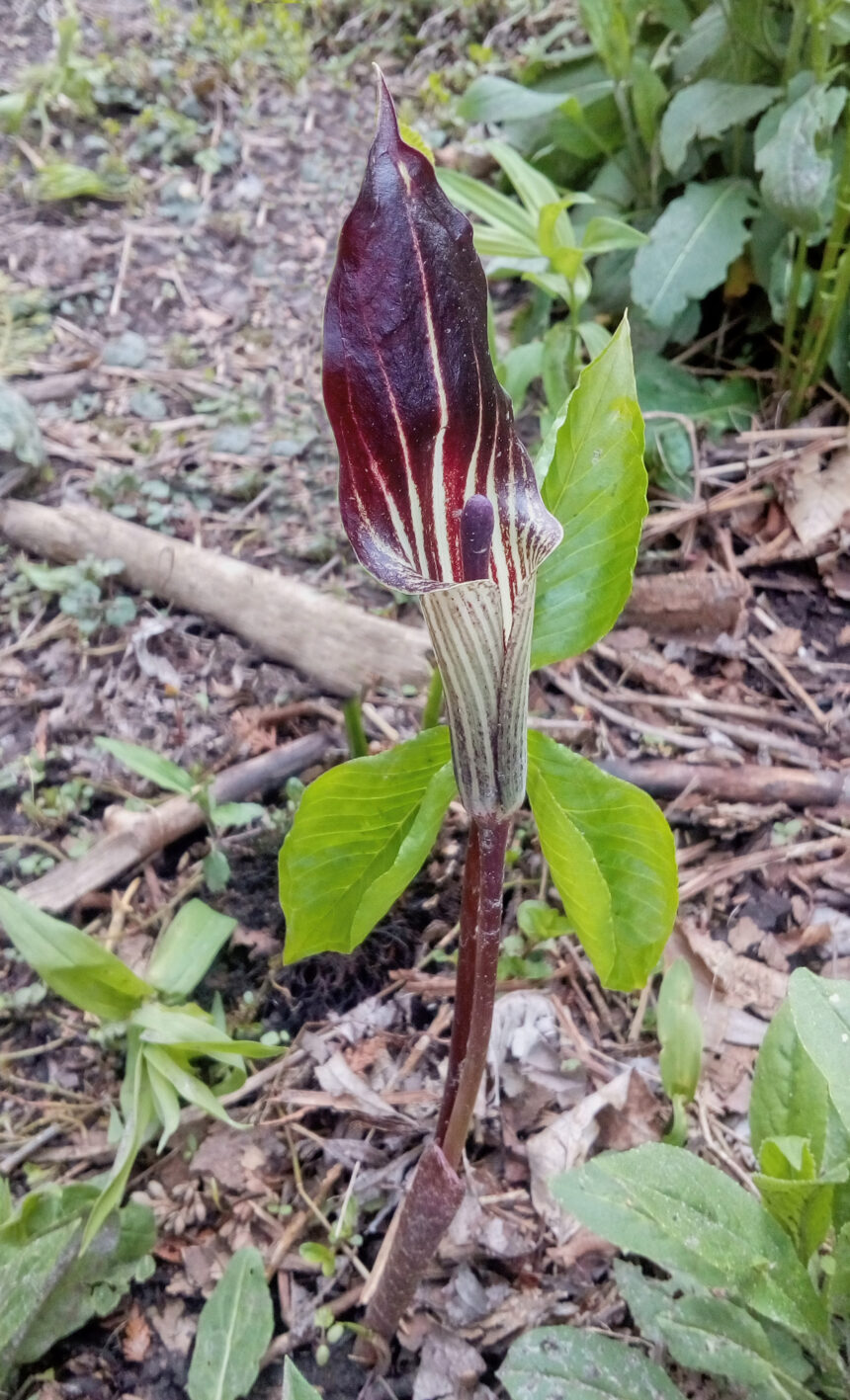
Arum triphyllum is a plant-derived homeopathic remedy, prepared from the fresh underground corm. Botanical and floral images are accurate representations.
2. Extraction & Preparation (Homeopathic Methodology)
- The fresh corm is harvested before flowering and macerated in alcohol to create the mother tincture (Q).
- This tincture undergoes serial dilution and succussion, following classical homeopathic pharmacopeial standards, to produce centesimal potencies.
Safety Note:
The raw plant is highly acrid and irritating. Only homeopathically prepared potencies are used therapeutically.
3. Core Sphere of Action
Arum triphyllum primarily acts on:
- Mucous membranes of the mouth, nose, and throat
- Upper respiratory tract
- Skin around the mouth and nostrils
- Nervous system (notably restless or compulsive behaviors)
Central Theme:
Intense acridity with constant irritation, rawness, and compulsive picking or destructive habits.
4. Key Clinical Features & Repertory Rubrics
Mouth & Nose
- Cracked, bleeding lips
- Raw, excoriated nostrils
- Burning, acrid nasal discharge
Mind / Behavior
- Restlessness
- Constant picking at the nose, lips, or fingers
- Inability to stop destructive movements
Throat & Respiration
- Hoarseness
- Croupy, harsh cough
- Raw, burning sensation in the throat
5. Comparative Remedies (Differentiation Table)
| Feature | Arum Triphy | Mercurius | Nat mur | Hepar sulph |
|---|---|---|---|---|
| Discharge | Acrid, corrosive | Thick, offensive | Watery | Purulent |
| Skin around nose | Raw, bleeding | Ulcerated | Cracked | Inflamed |
| Behavior | Constant picking | Irritable | Reserved | Sensitive |
| Cough | Croupy | Loose | Dry | Suppurative |
6. Clinical Insights
Arum triphyllum is especially valuable in pediatric ENT cases where nasal discharge is so acrid it causes raw, cracked, and bleeding lips and nostrils. A distinguishing sign is relentless picking or rubbing of the nose, lips, or face-even during sleep. In croup, select this remedy when hoarseness, throat rawness, and compulsive facial picking are present. Its indication is less about infection severity and more about the chemical-like tissue irritation it produces.
- If discharge is notably offensive and accompanied by profuse salivation – consider Mercurius.
- If suppuration with chilliness is prominent – consider Hepar sulphuris.
7. Homeopathic Uses
Common (Acute) Indications
- Acute coryza with excoriation
- Cracked lips, bleeding nostrils
- Croup with hoarseness
- Raw, sore throat
Chronic Indications
- Recurrent ENT infections
- Chronic nasal excoriation
- Habitual picking disorders
- Persistent hoarseness
Extreme/Adjunctive Indications
- Severe laryngeal inflammation
- Advanced croup
Note: Emergency airway management is critical in severe cases.
8. Constitutional Portrait
- Most frequently indicated in children
- Restless, irritable, and prone to repetitive destructive habits
- Sensitive mucous membranes
- Local irritation triggers compulsive movements and tissue breakdown
9. Potency & Practical Usage
| Potency | Pack Size | Clinical Role |
|---|---|---|
| 6C | 100 ml | Acute ENT irritation, excoriation |
| 200C | 100 ml | Recurrent or chronic mucosal disorders |
Dosage Guidance:
- Lower potencies may be repeated cautiously in acute scenarios.
- Higher potency is generally reserved for recurrent patterns and used less frequently.
10. Special Considerations: Pediatrics & Seniors
Children:
- Coryza with raw nostrils
- Croup with hoarseness
Seniors:
- Chronic nasal irritation
- Persistent hoarseness
Always rule out malignancy or medication-induced dryness in elderly patients.
11. Documented Clinical Applications
Authoritative references (Clarke, Boericke) highlight Arum triphyllum for:
- Acrid nasal discharge
- Excoriated nostrils
- Habitual picking in children
- Croup with raw throat
12. High-Yield Repertory Rubrics
- Nose – discharge, acrid
- Lips – cracked, bleeding
- Face – picking, constant
- Larynx – hoarseness
- Cough – croupy
13. Main Differentials
- Mercurius: Offensive discharge, prominent salivation
- Natrum muriaticum: Dry cracks without acridity
- Hepar sulphuris: Suppuration and chilliness
14. Clinical Decision Tips
Select Arum triphyllum when:
- Nasal discharge excoriates skin
- Lips and nostrils are cracked or bleeding
- Child constantly picks at the face
- Hoarseness and croup symptoms coexist
15. Sample Repertorization Chart
| Rubric | Arum Triphy | Merc | Nat mur | Hepar |
|---|---|---|---|---|
| Acrid nasal discharge | 3 | 2 | 1 | 1 |
| Excoriated nostrils | 3 | 2 | 2 | 1 |
| Constant picking | 3 | 1 | 1 | 0 |
| Hoarseness | 2 | 2 | 1 | 1 |
| Croup | 2 | 1 | 0 | 2 |
This revised summary provides a clear, structured, and professional overview of Arum triphyllum’s homeopathic profile, clinical indications, and differentiation points.