
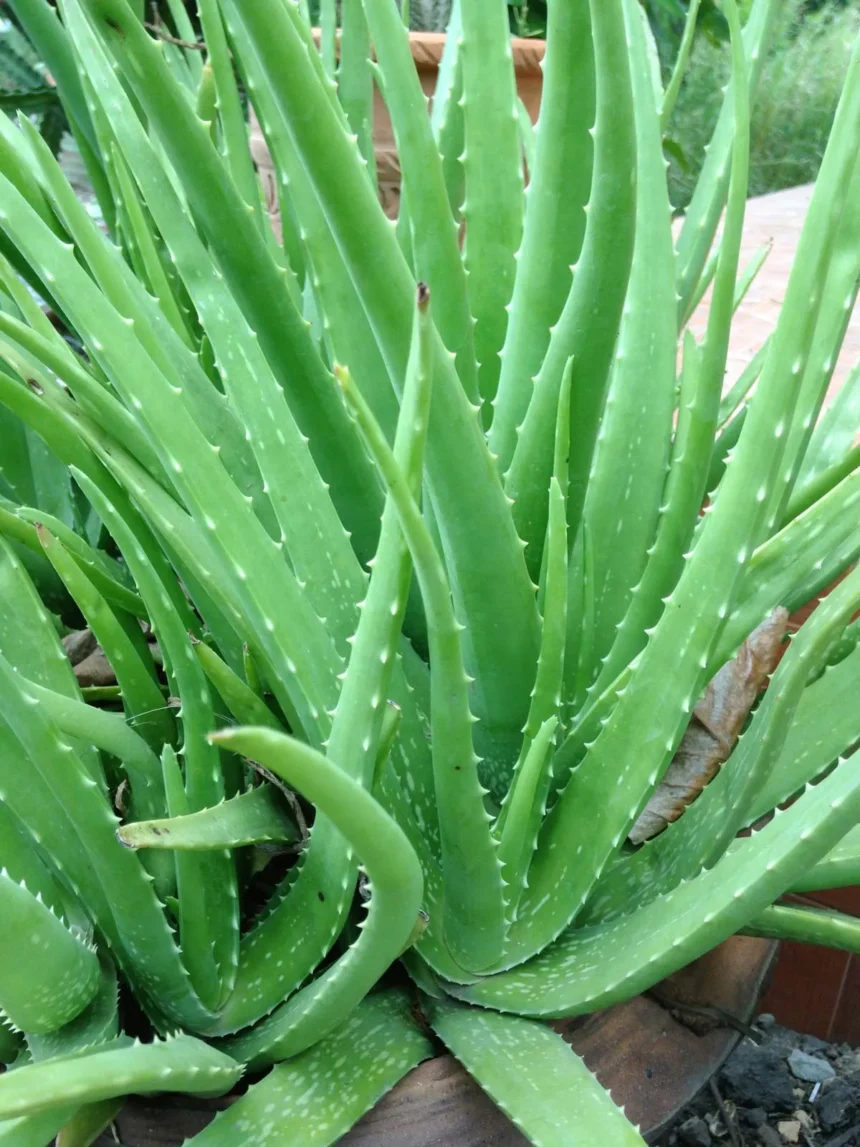
1. Plant Origin & Identification
- Botanical name: Aloe socotrina (commonly known as Aloe vera in homeopathic use)
- Family: Asphodelaceae
- Common names: Aloe, Barbados Aloe
- Natural habitat: Native to Socotra Island; now widely cultivated in tropical climates
- Part used: Fresh leaf juice (resin)
Materia Medica Relevance:
Aloe Soc is a principal remedy for issues involving the rectal–portal circulation. It is especially indicated for diarrhea, hemorrhoids, rectal weakness, and pelvic congestion- primarily when there is a marked sense of urgency or loss of control over bowel movements.
Contents
1. Plant Origin & Identification2. Extraction & Homeopathic Preparation3. Core Remedy Picture (Keynotes)4. Homeopathic Uses5. Constitutional Profile: Who Benefits Most?6. Potencies & Practical ApplicationPotency7. Effects in Children & Seniors8. Documented Clinical Use & References9. Key Repertory Rubrics10. Sample Comparative Repertorization
2. Extraction & Homeopathic Preparation
- Mother tincture (Q): Made by expressing the fresh leaf juice and macerating it in alcohol, then filtering.
- Potentization: Prepared by serial dilution and succussion, most commonly on the C scale.
Safety note: Crude aloe is a potent purgative. Homeopathic dilutions are safe when prepared by licensed pharmacies.
3. Core Remedy Picture (Keynotes)
- Essence:
- Sudden, urgent diarrhea
- Loss of sphincter control
- Sensation of rectal and pelvic heaviness
- Portal venous congestion
- Mental- Emotional:
- Mental sluggishness
- Indifference to surroundings
- Irritability due to physical discomfort
- Physical Modalities:
- Diarrhea immediately after eating or drinking
- Hemorrhoids that protrude like grapes
- Rectal weakness and soreness
- Lower back pain associated with bowel symptoms
4. Homeopathic Uses
- A. Common Indications:
- Acute diarrhea with urgency
- Hemorrhoids with prolapse
- Rectal burning, soreness
- Irritable bowel-type symptoms
- B. Chronic Indications:
- Chronic loose stools
- Long-standing hemorrhoids
- Portal congestion
- Pelvic venous stasis
- C. Severe Presentations:
- (Adjunctive use only; medical attention required)
- Severe dehydration from diarrhea
- Advanced hemorrhoidal disease
- Homeopathy supports but does not replace standard care
5. Constitutional Profile: Who Benefits Most?
- Individuals with sluggish portal circulation
- Sedentary or inactive lifestyles
- Those with poor bowel control
- Symptoms typically worse in the morning or after meals
Pathophysiology: Venous congestion leads to rectal weakness, diarrhea, and pelvic heaviness.
6. Potencies & Practical ApplicationPotency
| Potency | Pack Size | Practical Clinical Use |
|---|---|---|
| 6C | 100 ml | Acute diarrhea, rectal urgency |
| 30C | 100 ml | Chronic loose stools, hemorrhoids |
| 200C | 100 ml | Deep-seated portal congestion |
- Dosing: Acute cases may require short, repeated intervals; chronic conditions respond to more spaced dosing.
- Discontinue once bowel control is restored.
7. Effects in Children & Seniors
- Children:
- Sudden-onset diarrhea with urgency
- Loss of bowel control (requires medical oversight)
- Seniors:
- Chronic hemorrhoids
- Portal congestion
- Always rule out organic pathology before prescribing
8. Documented Clinical Use & References
Classical homeopaths such as Hahnemann, Kent, Boericke, and Clarke recommend Aloe Soc for:
- Diarrhea after eating
- Rectal weakness
- Hemorrhoids with prolapse
- Often compared with Podophyllum, Sulphur, and Nux vomica
9. Key Repertory Rubrics
- Rectum:
- Diarrhea – sudden, urgent
- Hemorrhoids – protruding
- Rectal – weakness
- Abdomen:
- Gurgling, fullness
- Generalities:
- Worse after eating
- Worse in the morning
10. Sample Comparative Repertorization
| Rubric | Aloe Soc | Podophyllum | Sulphur | Nux-v |
|---|---|---|---|---|
| Diarrhea – urgency | 3 | 3 | 1 | 2 |
| Rectal weakness | 3 | 2 | 1 | 1 |
| Hemorrhoids – prolapse | 3 | 2 | 2 | 1 |
| Worse after eating | 3 | 2 | 2 | 3 |
| Pelvic congestion | 3 | 1 | 2 | 1 |
Clinical Insight:
Choose Aloe Soc when urgent diarrhea and rectal weakness are the primary symptoms—especially with marked venous congestion and loss of control.